
Brown Cat Names, Distinctive Names for Brown Kittens
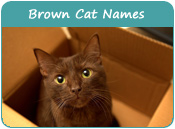
Most brown cats are tabby cats, and most tabby cats are descended directly from the Felis silvestris lybica wildcat that humans first started living alongside in the Fertile Crescent roughly 9,000 years ago. The mackerel tabby pattern — narrow vertical stripes on a warm brown ground — is the wild-type coat. If you've adopted a brown housecat with no pedigree paperwork, you've likely brought home the closest living version of the original domestic cat.
"Brown" is the folk word; cat fanciers split it. The Havana Brown carries solid chocolate as a breed standard (English origin, 1950s — the name comes from cigar or rabbit, depending which registry you ask). The Burmese sable, foundation color of the breed since Wong Mau in 1930, is the same chocolate-brown tone. Bengals are spotted on a brown ground, descended from Asian leopard cat crosses. Most browns walking around your neighborhood, though, are honest brown tabbies with no breed paperwork.
Brown housecats sit closer to ordinary life than show cats do. Tama, the calico-brown stationmaster of Kishi Station in Wakayama, Japan, is the clearest modern example — appointed in 2007, credited by the Wakayama Electric Railway with saving the line from collapse, with a tourism impact estimated above 1.1 billion yen.
What does your brown cat actually want to be called — something cozy from the kitchen, or something quieter from the woods?
| Name | Meaning | Gender | Origin |
|---|---|---|---|
| Achilles | without lips, brown, dark | Male | Greek |
| Amaretto | An Italian liqueur flavoured with almond. | Unisex | |
| Amber | A hard brownish-yellow fossil resin, precious jewel | Female | Word |
| Ashley | ash-tree | Female | English |
| Autumn | Season between summer and winter. | Female | |
| Bacon | Cured pork meat | Unisex | |
| Bailey | bailiff, fortification, able | Female | Occupational |
| Bay | Born In July, Seventh-Born Son | Male | Vietnamese |
| Bean | Fair-Skinned | Male | Scottish |
| Bear | Large mammal with large head, bulky body and coarse thick fur | Male | Animal |
| Beaver | after the tv show Leave It To Beaver | Unisex | |
| Berry | White, Fair | Male | English |
| Biscotti | Twice-baked Italian cookie | Unisex | |
| Biscuit | A cookie or cracker | Unisex | |
| Bole | Unisex | ||
| Bounty | Generous gift or reward | Unisex | |
| Bourbon | A whiskey distilled from fermented mash | Male | Word |
| Brandy | An alcoholic liquor distilled from wine | Female | Dutch |
| Brewster | brewer | Male | English |
| Brina | protector | Unisex | |
| Brodie | From Brodie | Male | Scottish |
| Bronson | son of Brown, son of the dark-skinned one | Male | English |
| Bronze | Copper and tin alloy | Unisex | |
| Brown | colour | Male | Color |
| Brownie | Moist chocolate cake with nuts | Unisex | |
| Bruin | Brown-Haired | Unisex | |
| Bruno | A masculine name from a Germanic word associated with brown. | Male | German |
| Brunon | Brown | Male | |
| Bryan | strong, virtuous, and honorable | Male | English |
| Bubbles | Thin spherical liquid filled with gas. Irrepressible activity. | Male | |
| Bunny | little rabbit | Female | Nickname |
| Burgundy | Region Of France, Color Of Wine | Male | English |
| Buster | One that breaks up something | Male | Modern |
| Buster Brown | after the Buster Brown Shoes | Unisex | |
| Butterscotch | Caramel flavored candy | Male | |
| Buzzy | Unisex | ||
| Cadbury | Brand of chocolate | Unisex | |
| Cappuccino | Italian espresso drink with foam | Unisex | |
| Caramel | A smooth chewy candy | Unisex | |
| Carmel | From the vinyard | Female | |
| Chai | Unisex | ||
| Charlie | a man: variant of Carl. | Male | English |
| Charlie Brown | A Man: Variant Of Carl. | Unisex | |
| Chestnut | Deciduous tree with an edible deep reddish brown nut. | Unisex | |
| Chewy | Needing chewing. | Unisex | |
| Chino | A coarse twilled cotton, tan coloured material | Unisex | |
| Chip | Fried slice of potato. Small piece of candy e.g. chocolate chip. | Male | |
| Chipper | Lively spirits, cheerful. Chip off the old block. | Unisex | |
| Chocky | Free man | Unisex | |
| Chocolate | Product of cocoa seeds used for drinks or candy | Male |
231 names found. Page 1 of 5.
Frequently Asked Questions
Are most brown cats actually tabby?
Yes — most random-bred brown housecats are brown tabbies, not solid brown. Solid brown (chocolate) requires two copies of the recessive b allele at the B locus, which is uncommon outside specific breeds like the Havana Brown and Burmese sable. The brown mackerel tabby pattern is the wild-type coat carried by Felis silvestris lybica, the African wildcat from which all domestic cats descend.
What's the difference between 'brown' and 'chocolate' in cats?
Brown is the everyday word; chocolate is the cat-fancy term. CFA does not list 'brown' as a recognized self-color in its standards — it uses 'chocolate,' 'cinnamon,' or breed-specific terms like 'sable' (Burmese) and 'Havana' (Havana Brown). Casual owners say 'brown cat' and the search data backs them up. Both terms describe the same family of coats.
Which breeds are typically brown?
Solid-brown (chocolate) breeds include the Havana Brown (English, 1950s) and the Burmese sable (founded by Wong Mau in 1930). Spotted browns include the Bengal, descended from Jean Mill's 1963 Asian leopard cat program. Brown-tabby variants are common in the American Shorthair, British Shorthair, Maine Coon, and most random-bred shorthairs.
Who is the most famous brown cat in the world?
Tama, the calico-brown stationmaster of Kishi Station in Wakayama, Japan. Appointed in 2007 by Wakayama Electric Railway, Tama is credited with reversing the line's financial collapse — official statements estimate the tourism impact at over 1.1 billion yen. After her death in 2015, her successor Nitama took the post. The station now has a Tama-themed train and museum.
What names suit a brown cat?
Kitchen-warm names land well — Cocoa, Mocha, Caramel, Toffee, Hazelnut, Cinnamon, Maple. Wood-tone names work for a quieter cat — Hazel, Oakley, Cedar, Sienna, Umber. For a Japanese-cat lover, Tama (after the stationmaster) carries real lineage. For a brown tabby moggy, the pragmatic farm-cat names — Tom, Mouser, Whiskers — fit better than show-cat naming would.
Related Naming Guides
Brown and White Cat Names: Mocha, Patches and Two-Tone Coat Clues
Brown and white cat names work best when they describe the particular balance of warm color and white on the cat in front of you. A cocoa saddle, a narrow cream blaze, speckled socks and a marbled tabby flank suggest different naming routes even though they share the same two-color label. This collection organizes forty-eight linked choices through coffee, bakery, confectionery, nuts, patch shapes, white placements, graphic patterns and animal or woodland comparisons. Every entry explains the visible clue, spoken rhythm or household issue that makes it useful, while separating brown-and-white coats from black tuxedo, orange-and-white and general bicolor pages. The practical sections show how to photograph markings, test a name without overreading personality, compare food words with pattern words and prevent similar pet calls from colliding. A final four-card shortlist uses coat accuracy, pronunciation, nickname stability and long-term daily household comfort instead of relying on a generic color label.
Cinnamon Cat Names: Warm, Spiced Ideas for Reddish-Brown Coats
Cinnamon is a remarkably precise coat, and it deserves names with the same warmth and specificity. This guide explains what cinnamon actually is at the genetic level, the b-light allele of the TYRP1 brown gene that produces a lighter, warmer brown than chocolate and is entirely separate from the red gene behind ordinary ginger cats. From there it moves through the spice rack with names like Cinnamon, Nutmeg, Saffron and Paprika, into autumn and warm earth with Maple, Copper, Rust and Ember, and through the Abyssinian sorrel heritage, where breeders call this exact color sorrel on a ticked coat. There are coat-match notes for lighter versus deeper cinnamon and for tabby versus solid coats, foodie warm picks like Honey, Toffee and Caramel, bolder names with flair such as Phoenix and Topaz, and bonded pairs for two reddish-brown cats. It even notes the Abyssinian named Cinnamon, the first cat ever genome-sequenced. Spice and feline coat genetics were verified against reference sources before writing.
Coffee and Latte Cat Names: Espresso, Mocha, and a Cafe Menu for Brown and Cream Cats
Coffee names have crept up the rankings to sit among the warmest, most charming choices there are for a cat, and they fit brown, cream, and caramel coats almost too neatly, because the whole cafe menu is built from exactly those colours. This guide opens at the espresso bar, with drink names from Espresso and Latte to Mocha, Cappuccino, Java, and Chai, each matched to the coat and the temperament it suits. It moves on to the beans, roasts, and origins, explaining Arabica and Robusta, the colour ladder from a pale blonde roast to a dark French roast, and single-origin names like Kona and Sumatra. A long sweet section gathers the syrups, toppings, and treats, from Caramel and Honey to Vanilla, Cinnamon, Biscotti, and Truffle. Later sections match a coffee name to your cat coat by coat, from rich espresso brown through caramel and ginger to milky cream, then sort the names by personality rather than colour, with the wired one as Espresso, the mellow one as Latte, and the sweet lap cat as Honey or Sugar. The guide supplies cafe pairings for two cats, such as Espresso and Latte or Sugar and Spice, and closes on choosing a name that still calls well across a room when she is fourteen. Every linked name is verified against our directory.
Brown Cat Names: 36 Calls by Pigment, Pantry, Earth, and Daily Use
Choose a brown cat name by documenting the visible coat before deciding whether the association is pigment, coffee, sweets, earth, wildlife, or an independent personal call. This guide evaluates 36 database-linked candidates including Cocoa, Chestnut, Mocha, Caramel, Mahogany, Fawn, Bruno, and their lane companions. Every note distinguishes a household color metaphor from registered terminology and genotype. UC Davis feline-color material explains that brown variants reduce black pigment and that overall appearance depends on interactions with other genes; the guide therefore avoids diagnosing chocolate or cinnamon genetics from photographs. Readers build a neutral-light body map, compare roots and tips of the fur, record tabby or point context, date kitten and seasonal images, and keep food names separate from feeding. An independent observer check, six-lane evidence score, pronunciation and roster audit, nickname test, and two-day trial convert color inspiration into a durable decision. The final identity card preserves spelling, visible evidence, source confidence, photograph date, and uncertainty without duplicating narrower Coffee, Cinnamon, Brown-and-White, or Havana Brown pages.