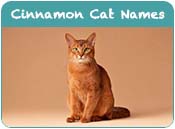
Cinnamon Cat Names: Warm, Spiced Ideas for Reddish-Brown Coats
By the iCatNames Editorial Team · Published
Some coat colors are loose, friendly words you can throw around. “Cinnamon” is not one of them. Among cat people it points to something quite specific: a warm, light reddish-brown that glows like the inside of a freshly snapped cinnamon stick. If your cat wears that exact shade, you have a chance to choose a name that is just as precise — warm, spiced, and a little bit rare. This guide starts with what cinnamon truly is, then works through the spice rack, the autumn woods, the Abyssinian heritage, and a long run of names that suit a reddish-brown cat from whisker to tail.
What cinnamon actually is
Here is where cinnamon earns its mystique. The color comes from the brown gene, known to geneticists as TYRP1 or the B locus, which controls how a cat builds eumelanin — the dark pigment that would otherwise read as black. There is a small allelic series at this locus: the dominant B allele gives normal black, the recessive b allele gives chocolate, and a third allele, b-light (written bl or bl), gives cinnamon. Cinnamon sits at the bottom of the ladder, recessive even to chocolate, so a cat needs two copies of that b-light allele to actually wear the color. The molecular detail is real: the cinnamon version comes from a nonsense mutation in TYRP1 that truncates the protein, leaving pigment that is paler and warmer than chocolate’s.
That single fact is what separates cinnamon from the cat next door. An ordinary orange or ginger cat is not cinnamon at all — ginger comes from the unrelated red gene (the O gene on the X chromosome), a completely different pathway. So a name like Ginger is charming but, strictly speaking, off-genre for a true cinnamon. Cinnamon is also lighter and warmer than chocolate, which is why breeders prize it as a distinct shade rather than just “light brown.” If you want to honor what your cat actually is, lean into the warmth and the rarity. A name such as Cinnamon itself, or the spice-adjacent Spice, wears the genetics on its sleeve.
It is worth pausing on just how uncommon this is. Because cinnamon needs two copies of a recessive allele that already sits below chocolate in the pecking order, plenty of cats carry it invisibly while showing black or chocolate instead. That is why true cinnamon turns up far more often in deliberately bred cats — Abyssinians, Orientals, Ocicats — than it does in the random-bred cat down the street, where the warm reddish coat you see is almost always the unrelated ginger gene. None of this changes how much you will love your cat, of course, but it does mean a genuinely cinnamon coat is a small genetic event worth marking. A name that nods to warmth, earth or spice quietly tells the story of that recessive pairing every time you call your cat to dinner.
Straight from the spice rack
The spice rack is the obvious home base, and it happens to be full of warm, beautiful words. Start with the namesake. True cinnamon comes from the inner bark of Cinnamomum verum, the Ceylon cinnamon tree native to Sri Lanka, and it is tan-brown, delicate, and gently sweet. The cheaper, darker, bolder spice most of us buy is usually cassia, from a different Cinnamomum species grown in China, Indonesia and Vietnam. Ceylon’s thin layers roll into fragile quills; cassia’s single thick bark is the hard, curled stick you cannot crush by hand. Both are lovely facts to carry quietly behind a cat named Cinnamon.
From there the rack opens up. Nutmeg is a soft, warm pick that suits a medium reddish-brown coat beautifully, and it pairs naturally with Clove, the dark, fragrant flower bud. Saffron leans golden-red and feels regal, fitting for a cat with a confident strut. Paprika brings a brighter, redder heat — perfect for a cinnamon cat on the warmer, more vivid end. Cayenne turns that heat up another notch and reads as a spark of a personality. Chai gives you the whole spiced, milky idea in one syllable, cozy and modern. For the foodie household there is Curry, Masala and Turmeric’s warm cousins, plus Sage, Basil, Rosemary and Thyme if you want a herb-garden softness rather than pure spice. Tabasco is a cheeky, fiery choice for a cinnamon cat who runs the house. And Pepper is the classic kitchen name that never feels out of place on a warm-toned cat.
Autumn and warm earth
If the spice rack feels too literal, the autumn woods offer the same palette in softer, more poetic words. Maple is a standout — the syrup and the turning leaf both land squarely on cinnamon-brown, and it works for any gender. Amber captures the glowing, slightly translucent quality of a sunlit cinnamon coat, while Copper and Penny bring the bright metallic version of the same idea. Rust is honest and a little rugged, ideal for a deeper, weathered reddish-brown. Ember and Cinder both glow at the warm end without tipping into fire-engine red, and Coal makes a nice ironic counterpoint if your cinnamon cat is on the darker side.
For names rooted in actual earth and pigment, Henna is a gorgeous fit — the plant dye stains skin a warm reddish-brown, almost exactly cinnamon’s color. Terracotta and Brick both name fired clay in that same family, and Clay and Sienna round out the pigment shelf (raw sienna is one of the oldest earth tones painters ever used). Sahara and Sandy catch the lighter, dustier cinnamon, while Mahogany and Chestnut go rich and dark. From the woods you can also borrow Cedar, Hickory, Walnut, Pecan, Acorn, Redwood and Sequoia — all warm-wood names that suit a brown cat without naming the color outright. Autumn itself is the simplest, most evocative choice of all.
Sorrel and the Abyssinian heritage
No cinnamon guide is complete without the Abyssinian, the breed that gave this color a second name. In Abyssinians the cinnamon coat is officially called sorrel — a lighter, coppery, cinnamon-brown that shows off the breed’s famous ticked tabby coat, where each hair is banded with bands of color rather than laid in stripes. Sorrel is sometimes described as a non-sex-linked red, which is a careful way of saying it is the true cinnamon b-light color and not the X-linked ginger gene at all. The word Sorrel makes a beautiful, breed-aware name, and it doubles as the russet-leaved garden plant, so it carries warmth from two directions at once.
There is a lovely footnote here for a cat named after this color. In 2007, the first domestic cat to have its entire genome sequenced was an Abyssinian — and her name was Cinnamon. So the spice, the coat, and a genuine milestone in feline genetics all meet in one word. Beyond the Abyssinian, cinnamon is a recognized color in other breeds too: the Oriental Shorthair carries it as a solid “warm cinnamon brown, colored to the roots,” lighter than its chestnut relatives, and the Ocicat shows cinnamon as one of its spotted-pattern colors. If your cat is one of these breeds, naming for the color is naming for the pedigree.
Matching the name to the exact shade
Cinnamon is not one flat color, so it helps to look closely before you commit. A lighter cinnamon — pale, golden, almost dusty — calls for airy names like Honey, Sandy, Sahara, Apricot, Peach or Goldie. A deep, saturated cinnamon suits heavier, richer words: Mahogany, Rust, Brandy, Marsala or Chestnut. If your cat wears the cinnamon as a tabby — rings, swirls or the ticked Abyssinian banding — pattern-friendly names like Tawny, Marmalade or Spice read well because they imply texture, not just a block of color. A solid cinnamon cat, with no markings to speak of, can carry a cleaner single-shade name such as Copper, Amber or Sienna. There is no wrong answer, but a name that matches the depth and pattern of the actual coat always feels a little more intentional.
Sweet and warm, without going full dessert
Cinnamon shares a kitchen with a lot of sweet, golden things, and a few of them make excellent cat names — just enough to feel cozy without turning your cat into a bakery. Honey is warm, classic and gender-flexible. Biscuit is friendly and a touch British, perfect for a soft tan-cinnamon cat. Toffee, Caramel and Butterscotch all name that buttery golden-brown that a lighter cinnamon coat can take on in the sun. Mocha and Cocoa pull toward the darker, browner end. For the grown-up version of sweet, Brandy, Whiskey and Marsala bring amber-brown warmth with a little more edge — good for a dignified older cat or one with a bit of swagger. The trick is restraint: one sweet name lands as charming, while a whole dessert menu starts to feel like a theme party.
You can also wander into the fruit bowl for warm tones that are not strictly spice. Persimmon is a stunning, underused choice in exactly the right color, while Mango, Clementine and Apricot lean golden-orange for a brighter cinnamon. Cherry and Coral bring a redder warmth, and Marigold, Poppy and Dahlia borrow the same heat from the flower bed. Marmalade famously bridges fruit and spice, and it is a wonderfully affectionate name for a warm-toned cat. For the lighter, golden end you might also reach for Tangerine or Clementine as a slightly longer, more musical option, or shorten right down to Mango for a punchy one-word call.
A quick word on saying these names out loud, because that matters more than it seems. Cats respond best to names with a clear, bright vowel and one or two beats — which is why so many of these warm picks work so well. Honey, Penny, Goldie and Ruby all end on that high, carrying vowel that cuts across a room, while richer names like Mahogany or Butterscotch are gorgeous on paper but tend to get shortened to Hogan or Scotch in daily life anyway. There is no harm in that; a long formal name with a short everyday nickname gives you the best of both. Pick the grand version for the vet’s paperwork and the snappy one for the food bowl.
Names with a little fire and flair
Cinnamon’s warmth invites a few bolder, brighter names for cats with big personalities. Phoenix suits a reddish cat who keeps bouncing back from trouble, and Blaze, Flame and Sunny all catch the glowing quality of a cinnamon coat in daylight. Sunset and Dawn name the times of day when warm light makes a cinnamon cat look his absolute best, while Aurora borrows the sky’s own warm-and-cool glow. For a regal touch there are gemstone names in the warm family — Topaz, Garnet and Ruby all glow in reddish-gold and suit a cat who clearly considers herself precious. And for a nod to ancient Egypt, where warm-coated cats were treasured, Ra (the sun) and Cleo carry sunlit grandeur. Simba and Fox (or the softer Foxy) round out the warm-animal kingdom for a cinnamon cat with a wild streak.
Bonded pairs of cinnamon cats
If two reddish-brown cats are joining your home together, matched naming makes the bond visible. Spice pairs feel natural: Cinnamon and Nutmeg, or Saffron and Paprika, or the cozy duo of Chai and Clove. For an autumn theme, try Maple and Amber, or Copper and Penny, or Rust and Ember. Sweet-and-warm pairings like Honey and Toffee, or Caramel and Biscuit, work for two softer-toned cats. And for a literary-meets-color combination, Marmalade and Ginger make a classic warm-cat couple, even if only one of them is technically cinnamon by genetics. Matching pairs feel best when the two names share a category but not a syllable — close enough to belong together, distinct enough to call across the room.
One last warm thought
Cinnamon is a quiet kind of special. It is a specific recessive coat — the b-light TYRP1 allele — a warmer, lighter brown than chocolate and a world apart from the everyday ginger gene, and in the Abyssinian it carries the proud name of sorrel on a ticked coat. A name like Cinnamon, Sorrel, Maple, Copper, Saffron or Henna does more than describe a color; it honors what your cat genuinely is, right down to the gene. Whichever warm word you choose, say it out loud a few times, watch how your cat responds, and let the one that makes you both feel cozy win. A reddish-brown cat curled in a sunbeam looks exactly like the spice she is named for — and a name that warm will never feel like a mistake.