Ragdoll Cat Names: 36 Calls by Point Color, Pattern, and Daily Use
Written by iCatNames Editorial Team · Reviewed
Ragdoll naming often begins with blue eyes or a pale, soft coat and then drifts into claims about gentleness, obedience, or universal lap-cat behavior. Appearance can support a name. A registry description can establish breed features. Neither one writes an individual animal’s personality in advance.
The 36 linked calls below follow six observable or practical lanes. Use registration papers when breed identity matters, describe the coat in ordinary language when it does not, and record which feature supports each finalist. Because pointed color develops over time, a durable call should tolerate change.
Read the standard while keeping personality evidence separate
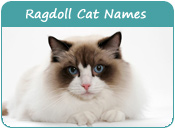
CFA describes the Ragdoll as a medium-to-large, moderately longhaired, blue-eyed pointed breed and recognizes colorpoint, mitted, bicolor, and van patterns. TICA likewise describes a blue-eyed pointed cat that matures slowly. These references provide vocabulary for coat and structure; breed descriptions summarize populations and show ideals rather than guaranteeing how one cat behaves.
Before naming, mark whether pedigree is documented. A pointed mixed-breed cat may show pale body color and blue eyes without being a Ragdoll. Visible observations remain usable, but the record should say pointed appearance rather than convert resemblance into ancestry.
Point-color calls with clear limitations
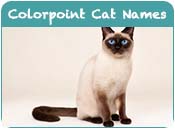
- Seal — follows the deep seal-brown point category and remains compact; use registry color only when documented, otherwise call it a dark-point association.
- Blue — registry blue refers to a cool gray tone rather than bright blue fur; the ordinary word can still honor the eyes or a family memory.
- Cocoa — offers a warm brown comparison for chocolate-looking points; it is visual shorthand, not proof of the accepted chocolate point color.
- Lilac — can echo the pale frosty point description or the flower; identify which source matters and avoid diagnosing color from a phone image.
- Flame — a common everyday association for red or warm apricot points; it predicts neither speed nor a fiery disposition.
- Cream — direct and quiet for pale warm points or body color; confirm that the household does not constantly use cream in feeding and cooking speech.
Check the ears when evaluating point color, then compare the mask, legs, and tail in neutral daylight. A color label on registration papers outranks a visual guess; a pet name may remain metaphorical when no paperwork exists.
Blue-eye imagery that does not overstate genetics
- Azure — a blue color word with a softer opening than Blue; listeners may vary the first vowel, making transcription part of the decision.
- Cobalt — a saturated mineral and pigment association with two clear beats; the cat’s eyes need not match a calibrated cobalt sample.
- Sapphire — an established gemstone image with a likely Saffy nickname; judge that shortcut before committing to the longer formal form.
- Skye — a personal spelling that can evoke sky or the Scottish island; spell it once to every caregiver and note the intended association.
- Celeste — a personal name with celestial associations whose syllable count varies by speaker; agree on household pronunciation early.
- Iris — links to the colored part of the eye, a flower, or a mythological figure; choose one route rather than treating all as evidence.
The breed description includes blue eyes, but photographic shade shifts with lighting and processing. Keep veterinary observations separate from poetic color comparison.
White-overlay calls for paws, chin, and body
- Mittens — suits visible white front feet and echoes the mitted pattern in ordinary speech; it does not confirm that the registered pattern is mitted.
- Socks — focuses on leg or foot contrast without technical baggage; compare it with another household pet before using a common marking name.
- Snowy — broad enough for white legs, belly, or body overlay; it remains an appearance metaphor and says nothing about ancestry or climate preference.
- Frost — catches pale edges and cool contrast in one beat; test the final cluster in urgent speech and against the word stop.
- Ivory — centers a warm pale body rather than the dark points; use the color association without invoking material value or wildlife products.
- Pearl — notices luster and pale color while functioning as a conventional personal call; its single syllable needs adequate contrast from curl or girl.
Map white on the chin, front feet, rear legs, belly, and face before choosing. CFA pattern definitions are precise: an inverted V, mittens, belly stripe, or restricted color has a specific role. A pet description can be simpler as long as it is not presented as a show classification.
Pattern and texture references for the whole silhouette
- Tippy — draws attention to darker extremities or a small contrasting tip; make the exact feature explicit so the story does not migrate.
- Paisley — a textile pattern association for flowing contrast rather than a registry pattern; Pais may be too slight as a distance call.
- Diamond — can follow a white blaze shape or reflected eye light; photograph the feature instead of declaring geometric symmetry that is not present.
- Cloudy — captures a soft pale body with darker edges; it does not assign a dreamy or passive character to the cat.
- Satin — points toward visual sheen and flowing coat lines; texture should be assessed gently rather than assumed from an image.
- Silver — a familiar color metaphor for cool shading; keep it distinct from a registered silver genetic or show designation unless that status is documented.
Use this lane when a single color term feels too narrow. Ask another observer to describe the unedited image before showing any names. Unprompted recognition strengthens a pattern association.
Scale and movement names that survive adulthood
- Atlas — carries mythological and map associations and can suit a large adult silhouette; size does not make the cat strong, dominant, or burdened.
- Bear — a familiar size or coat-shape comparison with one beat; reject cuddly or dangerous stereotypes and keep the note visual.
- Titan — deliberately grand and easy to spell, useful as a scale contrast for a kitten; assess the adult name rather than the temporary joke.
- Moose — informal and size-led, with a clear vowel; the wildlife comparison should never blur domestic-cat care or safety.
- Willow — emphasizes a long flowing line and works independently as a personal name; flexibility is imagery, not a behavioral prediction.
- River — can follow movement, coat flow, or a private place memory; write the actual source instead of claiming every Ragdoll moves the same way.
Ragdolls mature slowly, so a tiny-kitten label has a high correction risk. Put each finalist on a mock adult carrier card and imagine calling it beside a fully grown cat. A humorous contrast can remain, but it should be intentional.
Familiar personal names with low explanation burden
- Milo — recognizable, short, and coat-independent; common pet usage makes the local roster audit more important than an invented meaning.
- Lucy — a stable personal form with a bright opening consonant; verify that no close friend, child, or neighboring animal shares it.
- Sophie — familiar with a soft sound while imposing no behavioral trait; speech-to-text and record systems usually handle the spelling predictably.
- Oliver — a fuller everyday name with Ollie available; decide whether the nickname or formal version receives attention and rewards.
- Theo — compact in repeated speech and potentially derived from several longer forms; the pet record can simply preserve Theo.
- Cleo — two clear beats and minimal coat baggage; any Cleopatra association should be stated as private reference rather than Ragdoll heritage.
Keeping an ordinary personal candidate among the finalists prevents coat imagery from deciding everything. The call remains in use after eye color, coat shade, and novelty stop dominating conversation.
Build a six-view body map before ranking
Photograph the face, ears, front paws, rear legs, tail, and full body in indirect daylight. Record point color, white placement, blaze shape, eye impression, and coat flow as separate observations. Do not infer genotype, health, or pedigree from the map.
Attach each candidate to one field. Seal may depend on dark points, Mittens on front feet, Diamond on a blaze, and Willow on outline. A name with no field can remain as a personal choice; it should not borrow visual evidence it does not have.
Keep breed history, foundation stories, and the individual apart
TICA materials identify Ann Baker of Riverside, California, as the breed developer in the early 1960s and discuss foundation cats in the breed history. Historical facts may inspire Ann, Baker, Josephine, or Riverside as plain-text ideas, but none establishes a personal lineage for an undocumented cat.
Likewise, selecting a mythological, French, or Californian name does not reveal where the cat came from. Registration records establish pedigree. Adoption documents establish the known life history. The naming card records a household association.
Audit coat change and age dependence
Pointed kittens are lighter early in life, and standards allow maturation of color and coat over time. Date the photographs and note which candidates depend on a temporary shade. Cocoa may weaken as a visual description; River or Oliver may remain unchanged.
Do not treat change as naming failure. A truthful note can say that Frost was selected from the kitten coat. The call retains its family history even if the adult appearance becomes darker.
Compare lanes with an evidence-weighted scorecard
Select one point-color call, eye image, white-marking word, whole-pattern term, scale association, and personal form. Give zero to three points for visible support, spelling ease, pronunciation, nickname stability, roster contrast, and age durability. Mark pedigree-dependent statements with a separate verification flag.
Then compare pairs across lanes: Cocoa versus Azure, Mittens versus Paisley, Atlas versus Milo. If a visual candidate wins only because the breed is assumed rather than documented, remove that score and see whether it still leads.
Run caregiver and sound checks in ordinary settings
Have each regular caregiver speak the six lane winners near food, across a corridor, beside the carrier, and from a calm room. Log shortening, corrections, and clashes with commands, people, meals, or animals. Ask a listener to transcribe every finalist after one hearing.
Controlled research supports feline discrimination of a learned call from comparison speech under particular conditions; it neither promises recall nor ranks these sounds. Use brief positive trials to build familiarity, not to extract a choice from inconsistent responses.
Finish with a breed-aware but cat-specific record
Include the unedited image used for every appearance score, plus its capture date and lighting note. Future coat changes then become observable history rather than reasons to rewrite the original choice. If no photograph supports the reason, label it as memory or family association.
Ask which fact would remain true if every breed label disappeared from the file. Visible paws, a dated photograph, clear pronunciation, and family authorship survive. Put those durable facts first, then attach verified pedigree detail as an additional layer.
Run one final evidence downgrade. Replace every undocumented “is” statement with “resembles,” “was reported as,” or “was selected because.” Then see whether the call still works. This is especially useful for rescues, where a point pattern may be visible but pedigree is absent. The correction preserves the visual connection without assigning ancestry.
Test the shortlist against future contexts: an adult weight on a clinic screen, a boarding-room door, a microchip search, and a spoken travel handoff. Record where a joke needs explanation, calls sound alike, or a long form becomes an unwanted nickname.
Complete the identity card with formal spelling, daily form, accepted shortcut, one visible or personal reason, known pedigree status, reference-photo age, and collision notes. Keep show terminology only when appropriate records support it.
Review the choice after forty-eight routine hours and once coat development stabilizes. A durable Ragdoll name can honor eyes, points, white markings, scale, or family taste while leaving the individual more complex than a breed description.
Sources and Further Reading
- Cat Fanciers’ Association: Ragdoll breed and standard
- The International Cat Association: Ragdoll breed overview and standard
- The International Cat Association: Ragdoll breed introduction
- Scientific Reports: domestic cats discriminate their names from other words
Sources support factual context; suggested names and editorial grouping are produced by iCatNames.