
Male Tabby Cat Names
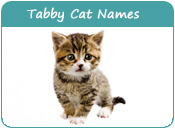
The word "tabby" came from a fabric. It traces to French tabis, the rich watered silk of medieval Europe, which itself borrows from Arabic ʿattābiyya — a reference to the Attabiya district of Baghdad, famous for striped cloth. The pattern was named after the silk; the cat picked up the name afterwards.
Four pattern types are recognized: mackerel (thin parallel stripes, the most common), classic (swirled bullseyes on the flanks), spotted (the look of the Bengal and Egyptian Mau), and ticked (agouti banding without stripes, as in the Abyssinian). The agouti gene decides whether any pattern is visible — A-cats show stripes; aa cats appear solid. Orange overrides this entirely, which is why every ginger cat is a tabby underneath.
Three religious traditions claim the M-shaped marking on a tabby's forehead. The Egyptian reading reads it as a reference to mau, the old word for cat. The Christian story has Mary stroking the forehead of a tabby that warmed the infant Jesus in the Bethlehem stable. In Islamic tradition, Muhammad blessed his favorite cat Muezza after she killed a snake threatening him; the M marks her descendants. Geneticists explain the marking as classic-tabby geometry resolving on a small canvas, but the three folklore lines remain genuine cultural threads with names attached — Mau, Mary, Muezza.
Famous tabbies are easy to honor: Morris, the 9Lives mascot rescued from a Hinsdale shelter in 1968; Maru, the Japanese internet brown tabby; Larry, Chief Mouser at 10 Downing Street since 2011; Hobbes from Bill Watterson's strip. Which lineage do you want a tabby kitten to carry?
| Name | Meaning | Gender | Origin |
|---|---|---|---|
| Abner | father of light | Male | |
| Ace | A top performer; also the one or highest card in many games. | Male | English |
| Adair | From the oak tree ford. | Male | Scottish |
| Adriyel | Of God's flock | Male | |
| Algie Longbottom | Neville's great uncle. | Male | |
| Amos Diggory | Cedric's father. | Male | |
| Angus | superb, unique | Male | Anglicized |
| Antonin Delehov | Death Eater | Male | |
| Archibald | Bold | Male | Teutonic |
| Ash | Ash tree. | Male | English |
| Balin | Mighty Warrior | Male | Hindu |
| Ballou | Male | ||
| Balto | Baal protect the king | Male | |
| Barnabus | after the vampire Barnabus Collins | Male | |
| Barney | Comforter | Male | English |
| Bartholomew | furrow, hill | Male | Aramaic |
| Basket | Gertrude Stein's two dogs of the same names. They are described in works that... | Male | |
| Baxter | baker | Male | English |
| Beau | Handsome. | Male | |
| Belvedere | after a freeway exit in Marin County, CA | Male | Italian |
| Bing | From the kettle shaped hollow | Male | |
| Blaze | Lisp: stutter. Blaise Pascal was a brilliant seventeenth century child prodig... | Male | Latin |
| Blur | Male | ||
| Bogie | Bowstring | Male | |
| Bosco | Male | ||
| Brady | large-chested | Male | Irish |
| Brahms | After composer Johannes Brahms | Male | |
| Brodie | From Brodie | Male | Scottish |
| Bryson | Variant of Bryce. | Male | English |
| Bugsy | Insect; gangster nickname | Male | |
| Busybody | Male | ||
| Buzby | Male | ||
| Buzz | To move quickly and busily, to bustle | Male | Modern |
| Cagney | Surname. | Male | Irish |
| Calypso | Greek for concealor. A type of music originating in the West Indies. Also a... | Male | Greek |
| Carthage | Loving | Male | |
| Catsup | Male | ||
| Chalky | From chalk - a soft white calcite mineral | Male | |
| Chester | fortress, walled town, | Male | Latin |
| Chico | Spanish for little | Male | Spanish |
| Cinamon | A spice | Male | Greek |
| Cody | Helpful. | Male | English |
| Colin | Strong and virile; victorious army; youth, child, victor | Male | English |
| Conrad | brave counsel | Male | |
| Cotton | Woody hill | Male | |
| Cyclops | one eyed monster | Male | |
| Cyril | lordly, proud | Male | Greek |
| Daffy | Bay Tree | Male | |
| Dalyell | From the little field | Male | |
| Danilo | Variant of Daniel God is my judge. | Male | Ukrainian |
238 names found. Page 1 of 5.
Related Naming Guides
Female Tabby Cat Names: 36 Calls for Stripes, Swirls, and Spotted Girls
Female tabby cat names become easier to compare when the pattern is read before the personality is guessed. This collection sorts 36 calls by stripe shape, warm or cool ground color, natural lookalikes, familiar feminine forms, and graphic markings. Each entry explains what can be observed on the cat, how the word behaves when spoken, and which nearby options it should be tested against. Readers can distinguish a mackerel stripe from a classic marble, decide whether amber or silver is the stronger visual anchor, and keep a common name such as Piper from blending into household speech. The guide treats tabby as a coat pattern rather than a breed and avoids assigning behavior from color or sex. Sex remains a naming preference, not a coat explanation. A final shortlist exercise compares one pattern-led name, one color-led name, and one color-neutral personal name across daylight, play, feeding, and quiet recall so the result works beyond a single photograph.
Male Tabby Cat Names: 36 Calls for Striped Boys
Male tabby cat names should respond to more than the generic idea of stripes. This 36-name collection asks owners to identify line direction, broken marks, swirls, background color, body shape, and calling rhythm before building a shortlist. Six groups cover motion and line words, wild-animal silhouettes, warm food colors, gray and silver materials, familiar masculine names, and recognizable striped-cat references. The explanations show when Stripe differs from Ripple, why Tiger can overwhelm a small domestic outline while Badger may fit it, and how Biscuit or Graphite can follow the coat's ground color instead of the pattern itself. The guide also separates tabby pattern from breed and avoids using a first impression as a personality prediction. A simple tracing exercise, sound-distance check, and nickname audit help families compare descriptive and independent choices. The final bracket reduces six distinct naming routes to three tested calls that still work during meals, play, veterinary visits, and the quieter adult years.
Mackerel Tabby Cat Names: Names for the Classic Striped Tiger Cat
The mackerel tabby is the original cat pattern — narrow parallel stripes running down the flanks from a dorsal spine line, arranged like the bones of a fish, which is exactly where the name comes from. This is the wild-type coat of Felis silvestris lybica, the African wildcat that domestic cats descend from, so a striped tabby on your sofa wears roughly the same camouflage its ancestors wore stalking through dry grass. This article stays in the stripe lane: the agouti gene that bands each hair, the Taqpep mutation that turns mackerel stripes into classic swirls, the four tabby patterns and how to tell them apart, the famous M on every tabby forehead and the legends behind it, and the silk-trade origin of the word tabby itself. Then come the names — more than 120 verified picks across tiger and wildcat names, stripe and motion names, warm ginger-coat names, and brown, silver, and orange mackerel shade matches, each linked to a real entry so you can compare meanings and choose.
Tabby Cat Names: 36 Calls by Pattern, Color, and Daily Clarity
Tabby cat names work better when the household identifies the visible pattern before reaching for tiger traits, breed labels, or generic personality adjectives. This guide compares 36 database-linked calls across stripes, swirls, spots, warm and cool colors, wild-feline associations, and ordinary human names. It explains that tabby is a coat pattern rather than a breed, distinguishes mackerel, classic, spotted, and ticked descriptions, and keeps color terms separate from genetic testing or registration. Stripe, Marble, Mackerel, Amber, Silver, Bengal, Milo, Cleo, and the remaining candidates receive individual notes on visual fit, reference accuracy, nicknames, spelling, sound collisions, and public use. Readers make a body-map photograph set, label direct and metaphorical choices, compare markings as the coat matures, and test finalists around actual household vocabulary. A pattern card, listener recall check, three-route score, and practical records handoff turn a familiar coat into a precise naming decision without predicting hunting, confidence, friendliness, or any other behavior.