
Russian Cat Names, Names Of Russian Origin
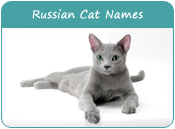
Bringing home a Siberian, Russian Blue, or simply a fluffy kitty who radiates old-world mystery? A Russian cat name is the perfect fit. Whether your new companion is a regal longhair or a scrappy shorthair, Russian cat names carry the warmth of samovars, snowy forests, and centuries of folklore. You will find elegant, strong, and affectionate options here, and many cat owners love how these names roll off the tongue with a little soulful weight.
Try classics like Anya, Katya, or Sasha for a sweet female kitty, or Boris, Dmitri, Nikolai, and Ivan for a sturdy tom. Literary fans adore Tolstoy, Pushkin, Chekhov, or Anna (after Anna Karenina), while Mishka (meaning little bear) suits a cuddly cat perfectly. Russian nicknames often end in ''-shka,'' ''-chka,'' or ''-ya'' for extra affection, echoing the tender way Russian families call their pets home at night. Names like Koshka literally mean cat in Russian.
Want more globe-trotting inspiration for your Russian cat name search? Browse our origins hub, or pair these Russian cat names with ideas from our fluffy and elegant cat names collections for the ultimate match for your boy or girl kitty.
| Name | Meaning | Gender | Origin |
|---|---|---|---|
| Adelaida | Sweet Or Noble | Unisex | |
| Agrippa | Roman general Agrippa | Unisex | Latin |
| Agrippina | Mother Of Nero | Female | Roman |
| Akim | Founded By God | Male | Russian |
| Aksana | Glory To God | Female | |
| Aleksandra | Protector Of Mankind | Unisex | Russian |
| Aleksei | Protector Of Mankind | Unisex | Russian |
| Alexandra | Feminine of Alexander. Defender of mankind. | Female | Greek |
| Alexia | Variation of Alexandra, Greek, defending men | Female | English |
| Alexis | "defending men" | Female | English |
| Alina | bright, beautiful | Female | Slavic |
| Alla | Allegedly Godness | Unisex | User Contributed |
| Alma | Spanish for soul | Female | Latin |
| Alyssa | Variant of Alice. | Female | English |
| Ana | Grace | Female | English |
| Anastasia | resurrection | Female | Greek |
| Anatoly | Sunrise | Unisex | Russian |
| Angelika | after Angelika Foster-Gooding | Unisex | |
| Angelina | Angel | Female | Greek |
| Anina | Female | ||
| Ann | Grace, Mercy | Female | English |
| Anna | Arthur's sister | Female | Greek |
| Anton | Latin, priceless one | Male | |
| Anya | grace | Female | Russian |
| Augusta | Venerable | Female | Latin |
| Barbara | foreign, strange, exotic, mysterious | Female | Latin |
| Basia | God's Daughter | Unisex | |
| Bela | named after Bela Lugosi and pronounced: BAY-la | Male | Czech |
| Belka | Unisex | ||
| Bell | ringer of the bell | Male | English |
| Bella | Beautiful | Female | English |
| Berta | glorious, learning | Unisex | |
| Boris | A fighter, battler | Male | Slavic |
| Brody | From the muddy place. Surname. | Male | Irish |
| Caspian | from C.S. Lewis The Chronicles of Narnia | Male | Place |
| Catarina | Blessed, Pure, Holy | Unisex | Italian |
| Caterina | Greek, pure | Female | Italian |
| Catherine | pure | Female | Greek |
| Catrina | Blessed, Pure, Holy | Unisex | Irish |
| Christina | anointed | Female | Greek |
| Czar | Title for male Russian Emperor | Unisex | |
| Danila | God Is My Judge | Unisex | |
| Daria | Rich | Female | Feminine |
| Dasha | gift of god | Female | Russian |
| Denis | Mountain Of Zeus | Unisex | French |
| Deva | divine, shining one | Female | Hindi |
| Dimitri | Earth Goddess | Male | French |
| Dina | From The Valley | Female | English |
| Dinah | Alice in Wonderland's cat | Female | |
| Efrem | Very Fruitful | Male |
262 names found. Page 1 of 6.
Frequently Asked Questions
What are popular Russian cat names for a Russian Blue?
For a Russian Blue, classic Russian cat names like Misha, Anya, Sasha, Nikolai, and Katya beautifully match the breed''s heritage and silvery coat.
Are Russian cat names suitable for female kittens?
Yes. Russian cat names like Anastasia, Natasha, Svetlana, Olga, and Mila are elegant, feminine, and easy to call out daily.
What Russian name means little bear for a fluffy kitten?
Mishka means little bear in Russian and is an adorable name for a fluffy, cuddly cat of any breed, especially Siberians.
Do Russian cat names work for Siberian cats?
Absolutely. Siberian cats originate from Russia, so names like Sibir, Volga, Tasha, or Dimitri honor their native homeland.
How do Russians typically nickname their cats?
Russians often use diminutives ending in -shka, -chka, or -ya, like Koshka (cat), Sashenka, or Vanya, to show affection.
Are there Russian cat names inspired by literature?
Yes. Pushkin, Tolstoy, Chekhov, Anna (from Karenina), and Raskolnikov are beloved literary Russian cat names for bookish owners.
Related Naming Guides
Toybob Cat Names: Tiny Names, Bobtail Names & Big-Cat Jokes for a Pocket-Sized Russian Breed
The Toybob is a naturally tiny Russian breed that weighs roughly 4 to 7 pounds fully grown and stays about the size of a six-month-old kitten its whole life. Crucially, it is small in proportion, not short-legged like a Munchkin, so its body, head, and limbs all scale down together. It carries a short, kinked bobtail of a few vertebrae produced by a mutation that appears unrelated to the Manx or Japanese Bobtail genes. Born in the Rostov region in the 1980s and once called the Skif-Thai-Don, it earned the name Toybob in 1994 and has been climbing TICA recognition tiers since 2008. This guide gives you name ideas built around that identity: tiny and miniature words, forever-kitten cute names, a short set of Rostov-honoring Russian picks, bobtail and short-tail names, toy and pocket words, and oversized big-cat names chosen specifically because they are funny on a four-pound cat. A comparison table sorts the Toybob from the Munchkin and the Singapura.
Kurilian Bobtail Cat Names: Names for the Russian Island Pom-Pom Tail Cat
The Kurilian Bobtail is a natural breed from the Kuril Islands, the volcanic chain that arcs between Russia's Kamchatka and Japan's Hokkaido, and its signature is a short kinked pom-pom tail that no two cats share alike. Each tail carries anywhere from two to ten vertebrae bent in spirals and snags, the result of a dominant mutation that is genetically distinct from the Japanese Bobtail's. Islanders kept these cats for at least two hundred years for one practical reason: they are exceptional fishers and ratters, water-loving and sturdy, with a loyalty so dog-like that owners walk them on leashes. This article covers the Kuril Islands origin, registry recognition by the World Cat Federation, FIFe, and TICA, and how the Kurilian differs from the Japanese and American Bobtails. Then come more than a hundred verified names across Russian human names, island and volcano names, fisher and hunter names, pom-pom tail names, and rugged wilderness names, each linked to a real dictionary entry.
Slavic Cat Names: From Kot Bayun and the Old Gods to Russian, Ukrainian and Serbian Favourites
Slavic folklore opens with a cat: Kot Bayun, the giant talking cat of Russian wondertales whose voice lulls travelers to sleep — his name comes from "bayukat", to soothe. This guide builds from that hook through the household spirit Domovoi (who sometimes appears as a cat) and into the pre-Christian pantheon Prince Vladimir raised in Kiev in 980: Perun the thunder god, his serpentine rival Veles, and Mokosh, the one goddess on the list, who spun fate and watched over women. It then turns practical, with real East and South Slavic given names and their meanings — Vladimir "ruler of the world", Vesna "spring", Zora "dawn", Vuk "wolf", Bogdan "given by God" — plus nature words like Zima (winter) and Zvezda (star). Names that exist in our directory are linked; many Slavic words stay plain text, because the folklore and etymology are the point. Polish, a West Slavic language, has its own separate guide.
Russian Cat Names: 36 Calls with Clear Nickname Paths
Russian cat names often reach English-speaking households through formal given names, affectionate short forms, literature, and place references. Those routes should not be mixed carelessly: a nickname is not always interchangeable with every longer form, Roman spelling can vary, and a geographic or author reference needs an accurate explanation. This guide evaluates 36 database-verified calls in eight deliberately different groups. Anya, Mila, Nika, and Nina begin with compact sounds; Dasha, Katya, Masha, and Misha show how similar endings crowd a multi-pet home; Aleksandra and Mikhail require planned shortening; Ivan, Ilya, Oleg, and Pavel offer steadier full forms; Akim and Feodor widen the sound range; Irina, Katia, Nadia, and Natasha test spelling families; Anushka, Larisa, Olga, Sasha, and Yuri compare cadence; Moscow, Siberia, Pushkin, Tolstoy, and Chekhov use documented cultural anchors. Explanations focus on pronunciation, records, and honest context rather than unsupported meanings or personality forecasts. A final family-map exercise prevents accidental duplication and selects one stable everyday call.
40 Strong Russian Girl Names For Female Kittens
Russian girl names sound musical and elegant, blending easily into English households even though Cyrillic uses thirty-three letters compared to twenty-six Roman ones. This collection of forty strong Russian names works perfectly for your female kitten. You can try regal classics such as Anastasia (a revival), Alexandra (defender of mankind), Ekaterina (pure), Sofia (wisdom), or Natasha (born at Christmas). Softer options like Anya, Nina (grace), Marina (from the sea), Tanya, Olga, Vera (faith), or Zoya (life) suit a gentle girl cat. Each name carries Russian heritage while feeling warm and graceful enough for everyday use.
35 Strong Russian Boy Names For Male Kittens
Russian names carry a strong, lyrical quality, and many translate beautifully into English even though Cyrillic uses thirty-three characters compared to twenty-six Roman letters. This selection of thirty-five names works on both sides of the alphabet for your male kitten. You can choose powerful classics such as Alexander (defender of men), Vladimir (universal ruler), Maxim, Dmitry, Boris (one who fights for glory), Ivan, or Mikhail. Softer choices like Sasha, Pasha, Dima, Leonid, or Anton suit a gentler tomcat. Whether your cat is bold or thoughtful, these names honor Russian heritage while staying easy for friends to pronounce.