
Ragdoll Cat Names, Cat Names of Ragdoll Breed, Page 4
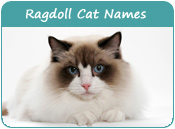
The Ragdoll is named for one specific physical trait: the original cats reportedly went limp when picked up, like a stuffed doll. The trait traces back to a single white domestic longhair named Josephine, the foundation matriarch of the breed, in Riverside, California in the early 1960s. Breeder Ann Baker paired Josephine with two males — Daddy Warbucks, a seal-point mitted, and Blackie, a solid black — and the breed grew from there. CFA's profile is honest about what survived genetically: "this characteristic is not typical of most of today's Ragdolls, but it did give rise to the name."
The Ragdoll grows slowly. TICA notes that full coat color appears at two years and full body size at four — for a male, that final size can reach 15–20 pounds, putting Ragdolls among the largest pedigreed cats alongside Maine Coons and Norwegian Forests. All Ragdolls are born white and develop their points (seal, blue, chocolate, lilac, red, cream, plus tortoiseshell and lynx variations) over weeks. TICA recognized the breed in June 1979, GCCF in 1990, and CFA followed with Championship in 2000.
Ragdoll names tend to fall in three honest categories. Foundation-stock honors — Josephine, Warbucks, Blackie — give a knowing wink to the breed's history. Slow-maturation names that age across four years of growth — Augustus, Genevieve, Rosalind, Theodore — suit a cat still becoming its adult self. And texture names like Linen, Velvet, and Silk match the silky coat and laidback temperament without dismissing the cat as a prop. Avoid Floppy, Noodle, and Jelly: they name the cat for what it does once, not for who it is.
Ragdoll size and pointed coloration are shared by two other longhair breeds with their own founder histories — Maine Coons, an American natural breed, and Birmans, descended from Burmese temple-cat tradition. Browse those collections if you want side-by-side naming comparison.
Meanings, origins and pronunciations appear only for records with checked sources. Blank fields have not been verified. Gender and collection labels are browsing choices.
| Name | Meaning | Gender | Origin |
|---|---|---|---|
| Dundee | Male | ||
| E.T. | Unisex | ||
| Ebony and Ivory | Unisex | ||
| Eclipse | Unisex | ||
| Edgar | Male | ||
| Edison | Male | ||
| Edmundo | Male | ||
| Edwardo | Male | ||
| Efrain | Male | ||
| Efren | Male | ||
| Elbertina | Female | ||
| Elmo | Male | ||
| Elsie | Female | ||
| Emily | Female | ||
| Eureka | Male | ||
| Eurypides | Unisex | ||
| Evanglista | Female | ||
| Exodus | Male | ||
| Fabien | Male | ||
| Fabienne | Female | ||
| Fairfax | Male | ||
| Ferran | Male | ||
| Festus | Male | ||
| Figaro | Male | ||
| Fingers | Male | ||
| Fitz | Male | ||
| Fleur | Female | ||
| Florence | Female | ||
| Flossie | Female | ||
| Flubbert | Male | ||
| Fontanne | Female | ||
| Foo | Unisex | ||
| Fraction | Unisex | ||
| Francisco | Male | ||
| Freckle | Male | ||
| Frederico | Male | ||
| Fresco | Male | ||
| Fresno | Male | ||
| Freydis | Unisex | ||
| Fshd | Male | ||
| Gabbie | Unisex | ||
| Gabrio | Male | ||
| Gadiel | Male | ||
| Galit | Female | ||
| Gallia | Female | ||
| Gamma | Male | ||
| Gandolf | Male | ||
| Gavin | Male | ||
| Gemini | Male | ||
| Geneva | Female |
543 names found. Page 4 of 11.
Related Naming Guides
Female Ragdoll Cat Names: 36 Calls for Blue-Eyed, Pointed Girls
Female Ragdoll cat names can draw from features that the breed standard actually describes: blue eyes, pointed color, white overlay patterns, substantial outlines, and moderately long coats. This guide turns those facts into 36 explained calls rather than attaching a generic soft personality to every kitten. Readers compare blue color words by brightness, separate seal and chocolate impressions from lilac and cream, and use mitts, boots, blazes, or an inverted facial V only when those marks are visible. Formal feminine names, doll references, and short everyday calls provide three color-neutral routes, each tested for nickname drift and household overlap. The article also warns that kittens develop color over time and that a breed label cannot predict an individual cat's response or behavior. Sex guides register here, not an assumed personality. A final scorecard balances current markings, likely sound consistency, family pronunciation, and room-to-grow so the selected name remains usable as the cat matures.
Ragdoll Cat Names: 36 Calls by Point Color, Pattern, and Daily Use
Ragdoll cat names are most useful when verified breed traits, visible markings, and a household’s private associations remain separate. This guide compares 36 database-linked calls across recognized point colors, blue-eye imagery, white overlays, pattern geometry, scale, and familiar personal names. Seal, Azure, Mittens, Paisley, Atlas, Milo, and the remaining candidates receive individual notes for visual fit, nickname drift, spelling, sound contrast, and adult use. CFA and TICA material anchors the breed discussion: Ragdolls are blue-eyed pointed cats, accepted patterns and colors have precise meanings, kittens develop color over time, and breed-level descriptions do not predict an individual cat’s behavior. Readers map the mask, ears, paws, tail, body, and white areas before building a six-lane shortlist. A pedigree boundary check, age-aware photo record, caregiver transcription test, two-day calling trial, and final identity card help families choose a call that still works after coat color matures and the kitten becomes a large adult.