
American Bobtail Cat Names, Names for American Bobtail, Page 4
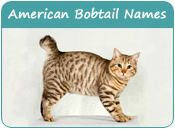
On a late-1960s holiday in Arizona, John and Brenda Sanders picked up a brown tabby kitten with a naturally short tail near an Indian Reservation. They named him Yodi, took him home to Iowa, and bred him with their colour-point queen Mishi. Yodi's bobbed tail turned out to be a dominant trait — and the American Bobtail traces, indirectly, back to that single road-trip pickup.
What makes the breed unusual is the rest of the founding story. Most mutation breeds (Cornish Rex, Sphynx, Selkirk Rex, Munchkin) are built tightly around one founding line. The American Bobtail is the opposite — breeders Mindy Shultz and Charlotte Bentley selected from feral bobtailed cats across the United States and Canada, deliberately widening the gene pool. That is why no two tails are identical: tails range from one to four inches, each one effectively a fingerprint. TICA recognised the breed as naturally occurring in 1989.
The American Bobtail looks wild — fleshy brow ridge, alert hunting gaze, muscular build — but has no wildcat ancestry. It also behaves nothing like its appearance suggests. Owners describe a clown-like personality, vocalisation through chirps and trills rather than meows, and strong bonding to entire households rather than one person. TICA notes the breed has been used by psychotherapists in treatment programs because of the cats' sensitivity to human emotions.
Before choosing a name, watch the cat for a week. American Bobtails reveal themselves slowly — a name like Yodi (after the founder) or Mishi works for the lineage-minded owner; Sedona, Mesa, or Canyon for the Arizona-origin nod; and the therapy-companion register (Mercy, Sage, Beau, Frankie) suits cats who will end up sitting next to anyone who needs them.
Meanings, origins and pronunciations appear only for records with checked sources. Blank fields have not been verified. Gender and collection labels are browsing choices.
| Name | Meaning | Gender | Origin |
|---|---|---|---|
| Shannon | Female | ||
| Sherbie | Unisex | ||
| Simon | Male | Hebrew-derived and ancient Greek histories | |
| Sonia | Female | ||
| Sonny | Male | ||
| Spitz | Unisex | ||
| Squash | Unisex | ||
| Striker | Male | ||
| Sumo | Unisex | ||
| Tara | Female | ||
| Tex | Male | ||
| Texas | Male | ||
| Thunder | Unisex | ||
| Tina | Female | ||
| Tinkerbell | Unisex | ||
| Tipsy | Unisex | ||
| Tonto | Male | ||
| Tori | Female | ||
| Travis | Male | ||
| Tribble | Unisex | ||
| Tyra | Female | ||
| Tyson | Male | ||
| Uma | Female | ||
| Uno | Unisex | ||
| Uzi | Male | ||
| Venus | Female | ||
| Vic | Unisex | ||
| Vicky | Female | ||
| Vivien | Female | ||
| Warhol | Unisex | ||
| Wesley | Male | ||
| Wiggins | Unisex | ||
| Winnie | A familiar form of Winifred | Female | English |
| Yankee | Unisex | ||
| Yogi | Unisex | ||
| Zack | Unisex | ||
| Zoey | Female | ||
| Zora | Female |
188 names found. Page 4 of 4.
Related Naming Guides
Mekong Bobtail Cat Names: River, Royal-Siamese & Colorpoint Names
The Mekong Bobtail is a living link to the original royal cats of Siam, the pointed, blue-eyed felines that wandered the temples and palaces along the Mekong River long before Western breeders straightened the Siamese tail. This guide grounds every fact: the breed's Southeast Asian homeland, its standardization in Russia and its 2004 renaming from Thai Bobtail by the World Cat Federation, and the recessive short-tail gene that makes each kinked tail a fingerprint no two cats share. It compares the Mekong honestly against the Japanese Bobtail, Kurilian Bobtail and the Siamese so the differences are clear. It also explains the dog-like temperament, the audible toe-walking gait, and the way males help raise the kittens. Then it offers themed name ideas drawn from the Mekong River and its six countries, Thai and royal-Siamese heritage, colorpoint and sapphire-eye words, the distinctive kinked short tail, temple and lotus serenity, and jewel and treasure names befitting a former palace cat. A pairing section closes it for anyone bringing home two.
Toybob Cat Names: Tiny Names, Bobtail Names & Big-Cat Jokes for a Pocket-Sized Russian Breed
The Toybob is a naturally tiny Russian breed that weighs roughly 4 to 7 pounds fully grown and stays about the size of a six-month-old kitten its whole life. Crucially, it is small in proportion, not short-legged like a Munchkin, so its body, head, and limbs all scale down together. It carries a short, kinked bobtail of a few vertebrae produced by a mutation that appears unrelated to the Manx or Japanese Bobtail genes. Born in the Rostov region in the 1980s and once called the Skif-Thai-Don, it earned the name Toybob in 1994 and has been climbing TICA recognition tiers since 2008. This guide gives you name ideas built around that identity: tiny and miniature words, forever-kitten cute names, a short set of Rostov-honoring Russian picks, bobtail and short-tail names, toy and pocket words, and oversized big-cat names chosen specifically because they are funny on a four-pound cat. A comparison table sorts the Toybob from the Munchkin and the Singapura.
Highlander Cat Names: Curled-Ear, Big-Pawed Names for a Bobtailed Breed That Looks Wild but Isn't
The Highlander is a deliberate American creation from 2004 — a cross of the Desert Lynx and the Jungle Curl, two domestic hybrid breeds, built to carry a big-cat look in a fully house-cat package. Three traits stack up at once: ears that curl loosely backward, a short bobbed tail, and paws that often carry extra toes. That combination makes naming this cat a genuinely different problem than naming a tabby. The breed name points at the Scottish Highlands even though the cat is American, so glen-and-tartan names sit right alongside curl names, extra-toe names, and look-alike lynx names. This guide collects more than ninety linkable picks grouped by what actually sets a Highlander apart — the curled ears, the polydactyl paws, the bobtail, the wildcat resemblance, and the large frame — plus an honest comparison of how Highlander ears differ from the American Curl and the Scottish Fold.
Kurilian Bobtail Cat Names: Names for the Russian Island Pom-Pom Tail Cat
The Kurilian Bobtail is a natural breed from the Kuril Islands, the volcanic chain that arcs between Russia's Kamchatka and Japan's Hokkaido, and its signature is a short kinked pom-pom tail that no two cats share alike. Each tail carries anywhere from two to ten vertebrae bent in spirals and snags, the result of a dominant mutation that is genetically distinct from the Japanese Bobtail's. Islanders kept these cats for at least two hundred years for one practical reason: they are exceptional fishers and ratters, water-loving and sturdy, with a loyalty so dog-like that owners walk them on leashes. This article covers the Kuril Islands origin, registry recognition by the World Cat Federation, FIFe, and TICA, and how the Kurilian differs from the Japanese and American Bobtails. Then come more than a hundred verified names across Russian human names, island and volcano names, fisher and hunter names, pom-pom tail names, and rugged wilderness names, each linked to a real dictionary entry.
American Curl Cat Names: Unique Names for Your Distinctive Feline Friend
The American Curl's signature curled ears and sweet temperament inspire ten themed categories of names. Ear and appearance picks like Curlie, Twirl, Flick and Coco celebrate their distinctive look, while playful options include Jester, Bingo, Dash, Giggles and Wiggles. Brainy picks honor Einstein, Newton, Sherlock, Tesla, Cleo and Athena. Affectionate names span Snuggles, Honey, Sweetheart and Cuddlebug, with origin-inspired Texas, Dakota, Lincoln, Liberty and Savannah celebrating American heritage. You will also find strength picks Titan, Atlas, Phoenix and Kali, cultural names Picasso and Frida, plus timeless classics like Max, Charlie, Lucy and Luna.
American Cat Names: 36 Calls from Places, People, Arts, and Civic Language
An American cat name can point to a United States place, public idea, artist, regional tradition, or familiar personal name, but those routes should not be collapsed into a vague claim about national identity. This guide organizes 36 database-linked calls into civic language, landscapes, cities, writers and public figures, regional arts and foodways, and names documented in current U.S. birth records. It explains how to verify an official geographic spelling, distinguish a person from a place, credit cultural sources, and avoid presenting Indigenous, regional, or family language as generic decoration. A source ledger, pronunciation check, local roster audit, household vote, public-context review, and quiet two-day call trial turn a broad template pool into a usable shortlist. The final identity card records the precise reference, accepted nickname, source date, and confidence level for later review, while keeping microchip registration and contact details separate from the story attached to the call.