Dinosaur Cat Names: Rex, Blue & Raptor for Your Tiny Apex Predator
By the iCatNames Editorial Team · Published
Watch a house cat freeze mid-stalk, hips low, tail twitching, eyes locked on a moth, and you are watching a hunting program that predates the cat by tens of millions of years. The cat is a pocket-sized ambush predator running ancient software, which is exactly why dinosaur names land so well: there is real wit in calling a five-kilo animal who naps eighteen hours a day “tyrant lizard king.” The contrast is the joke, and the joke is also the truth. This guide builds a naming kit from real paleontology — the Greek and Latin roots, the famous genera, the herbivores and the raptors, the movie stars — and routes every option through names that actually exist in our dictionary so each one carries weight beyond the punchline.
A quick grounding fact to start, because the whole theme leans on it. Tyrannosaurus rex was named in 1905 by Henry Fairfield Osborn, then president of the American Museum of Natural History, working from a partial skeleton that fossil-hunter Barnum Brown had pulled out of Montana in 1902. The genus name fuses the Greek for “tyrant” and “lizard”; the species name rex is Latin for “king.” Osborn briefly called some of the same bones Dynamosaurus imperiosus, “powerful lizard emperor,” before realizing they belonged to the same animal. So in naming a cat after this beast, you are reaching for a title that scientists argued over for real.
There is one more reason the pairing works. The word “dinosaur” itself was coined in 1842 by the British anatomist Richard Owen, from the Greek deinos (“terrible” or “fearfully great”) and sauros (“lizard”) — “terrible lizard.” Hang that label on a creature who weighs less than a bag of groceries and the comedy writes itself. The sections below sort the options the way you would actually shop for a name: by how recognizable they are, by what the roots mean, by size, by temperament, by coat, and by how many cats you are naming at once. Every linked option is a real entry in our dictionary, so the name keeps working long after the joke has landed.
Classic crowd-pleasers that read instantly
Start with the names that need no explanation. These are the front-of-house picks — short, punchy, and recognizable to anyone who ever owned a plastic dinosaur. The obvious flagship is Rex, the rex that means king and the name most people reach for first; it suits a confident, broad-shouldered cat who claims the highest cushion in the house. Spike nods to the spiky-tailed Stegosaurus and works for a tom with attitude, while Dino is the all-purpose cartoon-dinosaur name that fits a goofy, bouncy cat better than any specialist genus could. For a hunter, Raptor carries the swift-seizer menace without you having to spell out which species you meant.
Round out the crowd-pleaser shelf with terms borrowed straight from the dino-toy aisle. Fang works for a cat who shows teeth when annoyed; Bones turns the fossil idea into something dry and funny for a skinny, leggy cat; and Claws gives you the business end of any predator. None of these require a paleontology degree to land, which is the point — they read at the front door and deepen if a guest happens to ask.
By Greek and Latin roots — names that mean something
The fun of dinosaur nomenclature is that almost every name is a tiny description. The suffix -saurus is Greek for “lizard,” which is why it shows up everywhere from Brontosaurus to Stegosaurus. Triceratops breaks down into tri- (three), keras (horn), and ops (face) — literally “three-horned face,” named for the two brow horns and one nose horn. Velociraptor pairs Latin velox (swift) with raptor (robber or seizer), giving “swift seizer.” You can lift those root meanings straight into a cat name without quoting the genus.
A few more genera carry their meaning on the surface, even though the full Latin name stays as plain text on a cat. Stegosaurus is “roof lizard,” named for the plates that paleontologists once thought lay flat like roof tiles. Pteranodon — technically a flying reptile, not a dinosaur, fans should note — means “winged and toothless.” Diplodocus means “double beam” for the shape of its tail bones, and Spinosaurus is “spine lizard” for the great sail down its back. You will not find those tongue-twisters in a name dictionary, but the idea behind each one points you toward a real, sayable cat name.
For the swift-seizer idea, our dictionary gives you Swift for a cat who blurs across the hallway, plus Dash, Flash, Bolt, Arrow, and Zoom for the same speed-demon energy. The “robber” half of raptor suits a cat who steals food off counters — Raptor again, or the sneakier Prowler. For the “horn” and “face” ideas behind Triceratops, plain text usually wins, but Saber captures the same armed-and-pointed feel for a cat with dramatic markings, and Fang brings the teeth. The point of the roots is that you can label the cat by what a dinosaur did — run, seize, rumble, tower — rather than for a genus nobody can pronounce at the vet’s desk.
Fierce big ones vs. tiny-but-mighty
Dinosaurs ran the full size range, which is handy because so do cats. For a large, slow-blinking cat who fills a doorway, lean into the giants: Titan, Atlas, Goliath, Hercules, Maximus, or Tank all wear “T-Rex energy” well. Brutus and Bruiser add a working-class heft for a cat who body-checks the food bowl.
But not every dinosaur was a skyscraper. Compsognathus was roughly chicken-sized, and Microraptor was a crow-sized feathered glider — proof that “dinosaur” and “tiny” coexisted. For a pint-sized cat with outsized confidence, that contrast is the whole charm. Reach for Micro, riffing straight off Microraptor, or Mini, Tiny, Nano, and Speck. The comedy of a four-pound cat named Micro who still thinks she runs the household is exactly the tiny-but-mighty spirit. Mighty itself flips the joke the other way for the smallest kitten in a litter.
Thunder lizards and gentle herbivores
If your cat is the calm, lumbering type — the one who walks rather than darts and would rather graze the windowsill plants than chase anything — the long-necked and armored herbivores fit better than the raptors. Brontosaurus means “thunder lizard,” and it has one of the best comeback stories in science. The genus was folded into Apatosaurus back in 1903 and treated as invalid for over a century; then a 2015 study led by Emmanuel Tschopp and colleagues, examining neck, back, and shoulder differences, argued it was distinct enough to stand on its own, reinstating Brontosaurus as a valid genus. (Some paleontologists still debate the split, so call it a comeback rather than a closed case.)
From the thunder-lizard family you can pull Thunder directly for a heavy-footed cat, plus the rumble-adjacent Storm. Stegosaurus — “roof lizard,” for the plates along its back — gives you the gentle-giant vibe, and a spiky-but-peaceful cat can carry Spike for those tail spikes. For the placid herbivore energy overall, soft nature names work beautifully: Fern, Sage, Olive, Clover, and Willow all suit a cat built for slow afternoons rather than the hunt.
Movie and pop dinosaurs
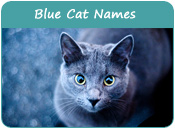
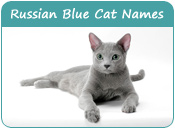
For many people the dinosaur is the dinosaur of the screen, and the franchise hands you two ready-made cat names. The Tyrannosaurus of the original Jurassic Park — the one who crashes through the fence in the rain — is nicknamed Rexy, and across the films she behaves like an accidental heroine, repeatedly bailing out the human cast. The other marquee dinosaur is Blue, the Velociraptor raised by the trainer Owen in the Jurassic World films and arguably the most beloved raptor in the series. Blue doubles as a real color, so it suits a grey-blue cat and gives you cover if you would prefer not to explain the reference.
Blue’s raptor packmates in the films were named Delta, Echo, and Charlie, and all three live in our dictionary: Delta, Echo, and Charlie. Name a single cat after one of them, or use the set if you brought home siblings — more on pairs below. For the dino-that-isn’t-quite-a-dinosaur crowd, the cartoon side of pop culture leans goofy and warm rather than fearsome, which keeps Dino evergreen for a clumsy, affectionate cat.
Coat and color matches
Dinosaur naming and fossil imagery hand you a surprisingly deep palette, so let the coat steer the pick. For a toasty ginger or amber-toned cat, fossilized tree resin gives you Amber — the same amber that famously (in fiction) trapped the mosquito blood in Jurassic Park — alongside Ginger and Rusty. Sandy and tan cats suit the dig-site palette: Sandy, Dusty, and Clay all evoke the badlands where the big skeletons come out of the ground.
Dark and grey cats get the stone-and-rock register that fits a fossil theme: Slate, Granite, Flint, Coal, Ash, Smoky, and Onyx for a black cat. A pale grey-blue cat wears Blue for the raptor and the color at once. And for cats whose coats catch the light — tortoiseshell, calico, anything with depth — the gemstone shelf works as a fossil-adjacent stretch: Jasper, Opal, Garnet, and Marble all read like something dug up and polished.
Fossil, amber, and dig-site names
Not every dinosaur name has to come from the animal itself. Half the romance of paleontology lives in the dig — the badlands, the bones, the slow brushwork — and that imagery gives you a quieter shelf of names for a calm, watchful cat who is more curator than predator. Amber sits at the top of this list for its fossil resin connection, doubling as a coat-color name for a honey-toned cat. The bone-and-relic register gives you Bones for a lean cat and Claws for a cat who leaves her mark on the furniture.
The dig-site palette — sun-baked rock, dust, and stone — carries plenty of usable names. Slate, Granite, Flint, and Dusty all sound like something pulled from a Montana hillside, and Clay nods to the sediment that preserves bones in the first place. For a cat with a glint to her coat, the gemstone end of the rock spectrum — Jasper, Opal, and Garnet — reads like a polished find. These names let you honor the science without ever pretending your cat is sixty feet long.
Personality matches
Beyond size and color, let temperament finish the choice. The relentless hunter — the cat who patrols the baseboards and ambushes ankles — earns a predator name: Hunter, Ambush, Prowler, or Shadow for the one who appears from nowhere. The speed freak who runs the hallway like a racetrack suits Rocket, Meteor, or Comet — all three carrying the cosmic-impact note that, fittingly, is tied to how the dinosaurs’ era ended.
The dramatic diva who poses on the highest shelf and surveys her domain is a Rex through and through, or a Titan. The chaotic clown who trips over her own feet is a Dino or a Bruiser. And the bright, quick problem-solver who opens cabinets is a Dynamo — a direct nod to Osborn’s discarded Dynamosaurus, “powerful lizard.”
Sets and trios for multi-cat households
Dinosaur naming is built for sets, because the franchises and the science both come in groups. The cleanest duo is predator-and-prey energy: a fierce Rex alongside a placid Spike, or the speedy Raptor next to the heavy Titan. For two cats who tear around together, pair Flash with Dash, or Bolt with Zoom.
For three or four siblings, the Jurassic World raptor squad is the ready-made set: Blue, Delta, Echo, and Charlie name a whole litter with a built-in story. A size-contrast pair is its own joke — a hulking Goliath beside a pint-sized Micro, or Titan and Tiny living up to opposite ends of the dinosaur size chart. And for a bonded gentle-giant pair, Thunder and Storm rumble nicely together.
Choosing your dinosaur name
Work from the cat outward, not the dinosaur inward. If the cat is big and unbothered, the giants and the thunder lizards fit — Titan, Thunder, Atlas. If she is small and fearless, lean into the comedy of Micro or Mighty. A coat in stone-grey or amber points you to Slate or Amber; a quick hunter points to Raptor or Hunter; a screen-buff household will reach for Blue. Say the shortlist out loud while the cat is nearby and keep whichever sounds like a call rather than a costume. The best dinosaur name is the one that still fits when the cat is curled up asleep and looking nothing like an apex predator — which, of course, is the whole charm of putting a tyrant lizard king on the windowsill.