Birman Cat Names: 36 Calls by White Gloves, Points, and Provenance
Written by iCatNames Editorial Team · Reviewed
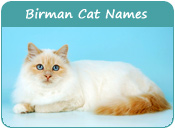
A Birman can suggest several naming stories at once: four white feet, darker points, deep blue eyes, a pale golden body, a breed history, and a household impression. Those signals are useful only when kept in separate evidence lanes. A white-paw call can describe what is visible. A historical call can record why a person chose it. Neither proves pedigree, genetics, temperament, or origin.
This guide offers 36 linked candidates and a method for reducing them. The breed standard, the origin story, and the individual cat receive different records. That boundary makes the result more accurate for registered Birmans, Birman-type cats, rescues with reported breed labels, and cats whose ancestry is unknown.
Start with a four-part evidence card
Before browsing names, write four fields: identity status, direct observations, documented history, and family associations. Identity status might be registered, reported by a previous caregiver, visually similar, or unknown. Direct observations include paw markings, point shade, eye appearance, and coat color in dated photographs.
Documented history comes from registration, adoption, veterinary, or transfer records. Family associations are the stories a household elects to add. A temple image belongs in the fourth field unless records support more. This structure stops an attractive legend from becoming an invented biography.
White-glove names for the breed’s defining contrast
- Mittens — notices paired white front feet in ordinary language; it does not certify the symmetry, height, or shape required in formal judging.
- Socks — describes visible lower-leg contrast without claiming breed status; check whether another household animal already uses this common marking name.
- Boots — gives greater visual weight to white extending up a leg; map the actual boundary rather than quietly enlarging it in the story.
- Lace — evokes a narrow, delicate white edge; the textile image is personal interpretation, not a technical term in a breed standard.
- Paws — direct and easy to explain when feet lead the choice; its broad meaning needs a photograph to preserve the specific reason.
- Ribbon — follows a clean band or flowing white line; confirm that the feature remains visible from normal standing distance.
CFA and TICA descriptions identify four white feet as central to the Birman look. Their detailed language matters in shows, but a household name need not assign a show grade. Record front gloves and rear white separately, photograph all four feet, and label any uncertainty.
Point-color calls with registry language kept separate
- Seal — a recognized dark-point color word and a compact call; use formal status only when the cat’s records support the classification.
- Slate — a cool gray metaphor for points seen in neutral light; it remains descriptive even when registered color is unknown.
- Cocoa — a warm brown association for mask, ears, legs, or tail; food imagery does not establish chocolate genetics.
- Lilac — can refer to a pale cool impression or a documented color; state which meaning supplies the name.
- Cream — emphasizes pale warmth and reads clearly on records; a casual color word should not be promoted to a genetic conclusion.
- Ember — catches warm reddish point color or glow in sunlight; compare an unedited indoor photograph before relying on that effect.
Pointed cats are born lighter and develop contrast with age. Camera white balance can also move a coat from cool to warm. Date every image, use an unedited reference, and distinguish “looks like slate today” from an official color designation.
Blue-eye calls without overreading photographs
- Sapphire — a gemstone image for saturated blue eyes with Saffy available; screen processing can intensify the apparent color.
- Azure — a broad blue term with a soft opening; listeners may spell it differently, so include the written form in handoffs.
- Cobalt — a strong mineral and pigment association in two beats; no eye needs to match a calibrated sample.
- Sky — short, familiar, and independent of a precise hue; test it against sigh and nearby one-syllable pet calls.
- Indigo — a deeper color image with three clear beats; it can survive ordinary variation in lighting better than a narrow shade claim.
- Iris — links to eye anatomy, a flower, or mythology; write the intended source so later retellings do not merge all three.
Blue eyes are a standard Birman feature, but a naming note is not an eye examination. Unequal pupils, redness, cloudiness, discharge, or a sudden color change belongs with a veterinarian, not in an aesthetic scorecard.
Golden-body and coat-texture associations
- Goldie — centers warm body color while working as an ordinary personal call; confirm that household pronunciation does not collapse into Cody.
- Honey — evokes pale gold without requiring exact pigment terminology; sweetness is an image, not a temperament forecast.
- Amber — offers a warm translucent color reference in two beats; attach it to coat observation rather than eye-color genetics.
- Silk — notices the visual flow of the semi-long coat; touch and grooming condition vary and should not be assumed from photographs.
- Satin — suggests reflected sheen while remaining a usable call; note whether the impression survives ordinary indoor light.
- Pearl — combines pale color and luster in one syllable; test its final consonant against girl, curl, and nearby names.
The Birman standard describes a pale body with a golden cast and a silky coat, but age, season, grooming, and light affect what a family sees. Base the call on a dated observation, not a promise that the coat will always look identical.
History-inspired names with explicit provenance labels
- Burma — reflects the historical country name embedded in popular breed narratives; it is a cultural reference, not proof of one cat’s birthplace.
- Mandalay — invokes a real Myanmar city often used in Western imagination; verify pronunciation and avoid presenting fiction as local history.
- Temple — points openly to the sacred-cat legend; label the source as legend rather than pedigree or archaeological evidence.
- Lotus — a widely shared botanical and cultural symbol; record the family’s specific association instead of assigning one universal meaning.
- Legend — makes the narrative status visible in the call itself; it works without pretending the narrative is verified fact.
- Mystery — acknowledges gaps in early breed history; it should not replace available registration or adoption information.
Major breed organizations distinguish the familiar temple legend from the uncertain historical record and later documented recognition. Preserve that distinction. A family may honor a story while still saying exactly what is known, reported, and unknown.
Familiar personal calls that do not depend on breed claims
- Milo — short, widely recognized, and coat-independent; check veterinary rosters and neighboring pets because local collisions are plausible.
- Lucy — a well-known call with two audible beats and predictable spelling; confirm that reuse would not confuse a close person or animal.
- Theo — brief enough for routine repetition; decide whether the clinic record preserves it alone or expands a formal version.
- Cleo — distinct in ordinary speech and free of a required coat story; any historical association should be written as personal context.
- Sophie — familiar across many settings with predictable spelling; its soft sound does not imply a quiet or compliant cat.
- Oscar — two strong beats and easy transcription; test it beside common calls such as off, outside, and the names of caregivers.
A personal-name lane is an important control. If pedigree is uncertain or coat color changes, these candidates lose little of their reason. They also reveal whether the household wants a visual label or simply a durable daily call.
Build a six-view marking map
Use indirect daylight to photograph the face, both front paws, both rear paws, side profile, and tail. Note white boundary, point shade, eye impression, body warmth, and coat flow in separate rows. Do not diagnose genotype or show quality from this map.
Ask a second observer to describe each unedited image before revealing the candidate list. Independent recognition strengthens a visual connection; disagreement is useful evidence that the metaphor may require too much explanation.
Separate Birman identity from Birman-like appearance
White feet, points, blue eyes, and semi-long hair form a recognizable combination, but appearance alone does not establish registered ancestry. Use “registered Birman” only with appropriate records. “Reported Birman,” “Birman-type,” or a direct coat description can be more accurate.
This distinction does not reduce the value of the cat or the name. It protects adoption histories and prevents a naming article from acting as a breed identification service.
Score one candidate from each evidence lane
Choose a glove call, point-color word, eye image, coat association, history reference, and personal form. Use a zero-through-three scale for direct support, pronunciation, spelling, nickname stability, household contrast, and adult durability. Add an uncertainty flag rather than inventing evidence.
Compare cross-lane pairs: Mittens against Seal, Sapphire against Silk, Temple against Lucy. Remove any points that depend on an unverified breed or history claim. A leader that survives the correction is more defensible.
Run practical speech and collision tests
Have every caregiver speak the finalists near feeding, beside the carrier, across a corridor, and in a quiet room. Ask an uninformed listener to write each after hearing it once. Log mishearing, unplanned nicknames, and clashes with commands, meals, people, or animals.
Research shows that cats can discriminate a learned name from comparison speech under controlled conditions, but the study supplies neither candidate rankings nor guaranteed recall. Use brief positive exposures. Do not force attention or treat a tired response as a vote.
Audit inherited claims at different confidence levels
Use four labels for inherited information: documented, reported, inferred, and unknown. A registration certificate is documented. A previous caregiver’s breed statement is reported. A conclusion drawn from points and gloves is inferred. Missing early history is unknown. Keep the label beside any claim on which the name depends.
Missing papers should not be filled with a temple story or guessed country. Mittens can remain supported by visible feet. Burma or Mandalay can remain household references when the card states the distinction.
Check grooming, season, and camera effects
Take another photograph after routine grooming and in a different neutral-light room. Coat separation, shine, and warm casts can change with grooming products, seasonal density, exposure, and white balance. Compare raw observations rather than selecting the most dramatic frame.
If Silk, Satin, Goldie, or Amber falls sharply between images, lower its visual-evidence score. A call may still win through sound or family value, but the record should not claim an effect shown by only one image.
Plan for long hair in identification records
Semi-long hair can obscure the height of white on the legs and alter the outline when wet, clipped, or seasonally fuller. Store a face photograph and a standing body view. Mark stable identifiers separately from coat impressions.
The call is only one recovery layer. Microchip registration, current contact information, and veterinary records carry the identification burden. A blue-eye photograph or breed-themed name cannot distinguish one cat reliably in an emergency.
Make a dated, portable naming record
Before signing the card, invite one person outside the household to audit it. They should be able to separate observation from legend, pronounce the daily call, locate the supporting photograph, and identify what remains unknown. Correct every sentence they read as a pedigree claim when it was meant only as imagery. This small review catches ambiguity that repeated family discussion no longer notices.
Complete the Birman record with the formal spelling, household call, permitted shortcut, winning evidence lane, identity status, supporting source, reference-photo date, pronunciation cue, and collision result. Store it beside veterinary and microchip details.
Revisit the decision after forty-eight hours and during later coat development, noting why any score changed. A strong Birman name can honor gloves, points, eyes, coat, history, or family taste while leaving space for uncertainty and for the individual cat to contradict every stereotype.
Sources and Further Reading
- Cat Fanciers Association: Birman breed profile
- The International Cat Association: Birman breed profile
- Cat Fanciers Association: pointed-cat color development
- Scientific Reports: domestic cats discriminate their names from other words
Sources support factual context; suggested names and editorial grouping are produced by iCatNames.