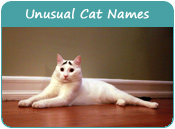
Unusual Cat Names: 36 Distinctive Calls with a Usability Check
Written by iCatNames Editorial Team · Reviewed
An unusual name earns attention because it departs from what a listener expects. That difference can be useful when five nearby cats answer to familiar calls, yet surprise alone does not make a name durable. The household still has to say it, spell it, record it, and explain it while avoiding a running joke about the animal.
The 36 calls below use six different kinds of novelty. Keep the route visible beside every candidate. A short rare form, a technical noun, an old human name, and a playful sound may all feel unusual, but they create very different work for the people who will use them.
Define unusual without inventing a rarity ranking
Merriam-Webster includes uncommon, atypical, attention-getting, and remarkable senses under unusual. None supplies a universal frequency threshold. A name can be rare in one clinic and familiar in another, and the iCatNames database is a collection rather than a census of living cats. Write the evidence you actually have: no match in the household, one match among local pets, or an unfamiliar response from three test listeners.
That local definition also separates this page from a broad unique-name promise. Unique can imply no duplicate at all; unusual only asks how far the call sits from the listener’s expectation. The practical target is recognizable difference, not obscurity at any cost.
Compact oddities with very little room for error
- Oz — two letters create a sharp record form and several possible story associations; decide which explanation, if any, belongs on the name card.
- Aja — visually compact but pronunciation is not self-evident to every English reader; ask listeners to read it before choosing a household sound.
- Ink — a concrete dark-material word that can follow coat imagery; the visible link is an association rather than evidence about breed or temperament.
- Jet — can evoke speed, aircraft, or the black gemstone material; record the intended lane so later explanations do not drift between all three.
- Rex — concise and familiar enough for records, with a title-like Latin history; check whether royal framing feels affectionate or overly grand in the home.
- Zip — a quick sound and an everyday verb or fastener word; reject it if repeated use turns normal feline movement into an energy stereotype.
Short forms expose collisions quickly. Say each beside sit, no, dinner, medication cues, family names, and the calls of other animals. A rare spelling does not help if the spoken form is already crowded.
Technical and object words that need an explanation budget
- Alto — a musical range term and a place or product component in other contexts; identify the music link if that is what gives the call value.
- Aqua — a color and water association with a clear written shape; it does not establish eye color under every light or any attraction to water.
- Copy — deliberately ordinary computer and office vocabulary; test whether the command-like sense becomes confusing when someone asks for a copy.
- Data — a technical noun plus a recognizable fictional association for some listeners; choose the intended pronunciation and write it down.
- Echo — a sound phenomenon, a mythic name, and a familiar pet call; the overlap makes it easy to explain but less locally rare than it may first appear.
- Widget — a generic device or interface label with a comic rhythm; approve Widge in advance because daily speech may shorten the full form.
Object words age differently from personal names. Technology changes, product associations appear, and a household joke can lose its context. Date the reason on a shortlist card, then ask whether the bare sound still works if that story becomes background.
Color, material, and weather images with observable anchors
- Dusk — an evening threshold word that can follow a muted coat or adoption-time memory; it makes no statement about a cat being secretive.
- Ebon — a literary dark-color form that may require explanation; compare it with the more familiar Ebony before accepting the extra correction burden.
- Fawn — an animal and pale-brown color association; use repeated neutral-light observation rather than an edited photograph to support a coat note.
- Lime — a bright fruit and color word that stands apart on paper; make sure food jokes do not imply that citrus is a feline treat.
- Slate — a stone and restrained gray-blue image; ordinary color description should remain separate from registry color terms or genetics.
- Zephyr — a literary wind word with a likely Zeph shortcut; evaluate the expanded name and shortcut separately because Zeph may carry most urgent household use.
A visible anchor reduces explanation work, but it can also overclaim. Coat, eye, and movement observations change with light, age, and setting. Phrase the card as “chosen for the evening-gray image” rather than “proves this cat is mysterious.”
Movement and sound words that must not become behavior labels
- Bam — a single impact sound that is easy to call; remove it if the joke encourages people to narrate every accident as part of the cat’s identity.
- Buzz — carries insect, sound, and popular-culture routes; its final consonants need a room-distance check in the household’s accents.
- Flip — a motion verb with an upbeat edge; it cannot predict agility, play level, or willingness to perform.
- Jazz — a music reference with a compact sound; note whether the genre matters personally or merely supplies a stylish spelling.
- Jinx — familiar in fiction and superstition language; use only when the household can reject blame-based jokes about illness, damage, or bad luck.
- Taz — often read through a cartoon reference or a clipped personal form; assess the likely high-energy stereotype before keeping it.
A name is not a training plan or a behavioral assessment. In defined experiments, Saito and colleagues reported that cats distinguished their own names from comparison words; the work did not rank these sounds or promise recall. Use the call consistently and pair wanted responses with an appropriate positive routine rather than expecting the word to manufacture conduct.
Older human forms that become unusual through context
- Edna — a recognizable human form that may feel vintage beside current pet calls; check family associations before treating age alone as novelty.
- Igor — carries cultural and fictional baggage for many listeners; ask what image appears first and reject caricature if it overwhelms the sound.
- Juno — a Roman divine name and a modern personal form; mythology should be named accurately rather than reduced to a vague magical label.
- Ned — short, conventional, and unexpectedly plain for a cat; its difference comes from placement, not an exotic origin story.
- Sid — similarly compact and human-scaled; compare it with sit in rapid speech before approving it for a training-heavy home.
- Zed — the letter-name used in several English varieties; caregivers who normally say zee should decide whether the reference feels natural.
Calling a familiar human name unusual can reveal generational bias. Ask whether the name belongs to a close relative, colleague, or community figure. Surprise is not worth an avoidable social collision.
Deliberate quirks that need a dignity review
- Bean — a small food word with affectionate use; it should remain respectful when spoken at a clinic or when the kitten becomes an older adult.
- Binx — a recognizable fictional-cat reference for many households; document whether the source or the sound is the actual reason.
- Bynx — an altered spelling that increases visual difference while sounding like Binx; measure how often the extra correction will matter.
- Moxie — an English word associated with energy and nerve; use that as the namer’s admired idea, not a prediction of the cat’s personality.
- Roo — a tiny call with animal and fictional echoes; its open vowel may travel well, but that must be tested in the actual rooms.
- Trinket — a small-object word with an affectionate found-treasure image; verify that the “little value” dictionary sense does not feel dismissive.
Run a future-self review: imagine the call on an adoption update, prescription label, boarding form, and lost-pet notice. A playful name can pass all four. The question is whether the humor stays with the household rather than landing on the animal.
Build a local collision map instead of claiming national rarity
List the names of current and recent pets in the home, close family, the regular veterinary practice if known, and animals frequently encountered by a sitter. Add command words and two-syllable nicknames. Mark exact written matches, close spoken matches, and shared nicknames separately. Oz may be visually isolated while sounding close to Roz; Widget may be unique but collapse to Widge beside Midge.
Repeat the check after choosing a nickname. Many collision problems appear only when Zephyr becomes Zeph or Trinket becomes Trin. A name can remain unusual on a certificate while becoming ordinary in speech.
Measure explanation burden with three listeners
Show the written candidate to a household member, an occasional caregiver, and a new reader viewing it for the first time. Ask each to read it, then dictate the name without showing the spelling. Record the three outputs without correcting them mid-test. The aim is not unanimous pronunciation; it is knowing the maintenance cost before commitment.
Next, give the shortest truthful explanation. “Dusk, for the evening light when she arrived” is portable. A paragraph involving several franchises, translations, and personality assumptions signals that the reference may be doing more work than the call.
Protect contrast in a multi-cat household
Compare the opening consonant, stressed vowel, rhythm, and likely nickname of every resident animal. Do not score only written distance. Data and Dada look different from Luna but may still blur when several calls share the same cadence and the same speaker. Test from the doorway with normal volume, not a staged shout.
The Scientific Reports study cautions against overgeneralizing from household cats to crowded cat-café conditions. It supports a modest reason to observe discrimination; it does not supply a formula that makes two unusual names automatically separable.
Make the identity record boring and accurate
Use one primary spelling across the veterinary record, insurer, license where applicable, boarding profile, tag, and microchip registry. In AAHA guidance, the implanted chip supplies an identification number tied to maintained registry information. An unusual call is not a substitute for current ownership and contact data.
Add pronunciation and nickname fields for Aja, Bynx, Zephyr, or any form a reader may hesitate over. Keep private jokes out of public recovery notes. The useful record answers how to say the call, what alternate form the cat hears, and whom to contact.
Run a three-context trial before changing every record
- Quiet care: use the candidate during food preparation, brushing, and calm approach without demanding a response.
- Distance: ask regular caregivers to say it once from two normal rooms and note whether the intended sound survives.
- Public handoff: enter it into a sample intake record, then have a listener restate the spelling and nickname.
Keep observations descriptive: heard clearly, confused with Sid, shortened spontaneously, or required two spelling corrections. Avoid turning one ear movement or missed call into a judgment about intelligence or attachment.
Score difference and maintenance as separate columns
Give each finalist zero, one, or two points for local distinctiveness, listener transcription, nickname agreement, cultural comfort, public dignity, and record consistency. Then add a separate explanation-cost note measured in one sentence, two sentences, or repeated correction. Do not collapse the sheet into a universal ranking; the columns show why one household may keep Widget while another keeps Ned.
Reject a candidate when novelty is its only advantage, when the joke assigns blame, when a close person objects to the use, or when caregivers cannot agree on the spoken form. Keep the call whose difference is visible and whose maintenance the household willingly accepts.
Write the final name card
Record the chosen spelling, pronunciation cue, approved nickname, one-sentence origin story, collision result, and review date. Include the alternate candidate that came closest and the reason it lost. That note prevents the household from reopening the entire list when the initial surprise fades.
An unusual cat name succeeds by remaining usable after it stops being new. The strongest evidence is not a dramatic reaction or an invented national rank. It is a stable call that multiple caregivers can carry through meals, care, records, travel, and years of ordinary companionship.
Sources and Further Reading
- Merriam-Webster: unusual definition and usage
- Scientific Reports: domestic cats discriminate their names from other words
- AAHA: pet microchipping and current identification records
Sources support factual context; suggested names and editorial grouping are produced by iCatNames.