Himalayan Cat Names: 36 Calls by Points, Blue Eyes, Coat, and History
Written by iCatNames Editorial Team · Reviewed
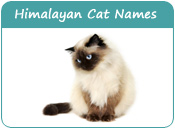
A Himalayan combines Persian Breed Group structure and coat with colorpoint patterning and blue eyes. Those breed-level facts can guide a name when registration is known. They cannot identify an undocumented cat from a photograph or predict how one individual will behave.
The 36 linked calls below use six evidence lanes. Color, eyes, landscape imagery, coat texture, breed history, and personal taste remain separate. A family can choose from any lane while recording what is observed, documented, borrowed, or simply loved.
Open an identity-and-appearance record first
Label breed status as registered, reported by a prior caregiver, visually similar, or unknown. Add dated unedited photographs of face, ears, front legs, rear legs, tail, full body, and eyes. Record point shade, pattern, body contrast, and coat condition separately.
Appearance can support a visual metaphor. Registration supports breed terminology. A rescue label is useful history when marked as reported. None should be silently upgraded into pedigree, genotype, show quality, or a personality diagnosis.
Point-color calls grounded in visible extremities
- Seal — a recognized dark-point term and a compact call; use it formally only when records support the color classification.
- Blue — may describe a cool gray impression, eye color, or a documented point term; mark the exact visual or registered route on the card.
- Chocolate — a recognized point-color word and familiar visual image; genetics cannot be confirmed by a name or screen photograph.
- Lilac — may denote a registered pale point color or a household color metaphor; keep the two confidence levels distinct.
- Flame — often used for warm red-point imagery; it does not predict energy, aggression, or attraction to heat.
- Cream — focuses on pale warm points with simple spelling; a casual observation is not a laboratory or registry result.
Compare mask, ears, feet, and tail under neutral daylight. Camera white balance can move gray toward brown or warm a pale coat. Save the original dated file and treat a high-contrast edit as presentation, not evidence.
Blue-eye associations without medical or color certainty
- Sapphire — a saturated gemstone image with Saffy as a likely shortcut; screen enhancement can exaggerate the apparent shade.
- Lapis — evokes lapis lazuli and supplies two audible beats; listeners may require a spelling cue.
- Azure — a broad blue word whose first vowel varies among speakers; put the pronunciation on the handoff card.
- Cobalt — a mineral and pigment reference with strong consonants; use it as blue imagery, not a demand for a measured pigment match.
- Indigo — a deeper color association that remains usable across lighting changes; it is metaphor rather than an eye diagnosis.
- Iris — offers an anatomical eye term, a flower, and a mythological figure; document the intended route instead of stacking unrelated meanings.
Blue eyes belong in the breed description, but redness, cloudiness, discharge, unequal pupils, or sudden change belongs with a veterinarian. The naming scorecard has no medical function.
Mountain imagery labeled as metaphor, not origin
- Everest — a widely recognized mountain reference in three beats; record it as landscape imagery, never as the breed’s development site.
- Alpine — evokes high-elevation landscapes in general; the word is broader than the Himalayas and should be labeled imaginative.
- Rocky — may suggest mountains, stone, or a personal-name tradition; record the intended source before character associations take over.
- Sierra — a geographic and personal-name form with a clear rhythm; it references a mountain range term, not Himalayan ancestry.
- Denali — names a specific North American mountain and works as a personal call; geographic accuracy requires acknowledging that separation.
- Maple — can mark a Canadian family connection or warm point shade; Canada enters documented breed development, not feline birthplace by assumption.
TICA explains that Himalayan names the pointed pattern used in other animals and describes breeding programs in the United States and Canada. A mountain shortlist is visual poetry. The record should never relocate the breed’s development to the Himalayas.
Long-coat and pale-body calls with grooming effects noted
- Flurry — follows a pale moving coat or snow image; it carries no claim about climate tolerance or activity.
- Blizzard — deliberately dramatic for a light body and dark edges; test Blizzard and Bliz as separate calls.
- Cotton — notices pale color and an impression of softness; the metaphor provides neither grooming instructions nor a literal fiber comparison.
- Velvet — evokes visual depth and sheen despite the long coat; grooming condition can change the impression.
- Silk — a concise texture association for flowing hair; it remains imagery rather than a material comparison or quality grade.
- Fuzzy — informal and direct for the silhouette; decide whether it still feels respectful during senior or medical care.
Photograph the coat before and after routine grooming. Mats, seasonal density, clipping, and exposure affect outline and shine. Lower a visual score when the feature appears in only one posed image.
Documented breed-history references
- Newton — points to Newton’s Debutante, identified by TICA as the first Himalayan kitten from the 1931 program; preserve the full connection.
- Virginia — can honor breeder Virginia Cobb or remain a place and personal name; write the historical route when intended.
- Clyde — may reference Dr. Clyde Keeler, who worked with Cobb; avoid crediting either person with every later breed development.
- Debutante — draws directly from the kitten’s recorded name and offers Deb as a shortcut; the long form needs a public spelling test.
- Ben — can acknowledge Canadian breeder Ben Borrett or function independently; the card should say whether history matters.
- Aurora — a natural-light image and conventional call that can also evoke northern Canada; it is not a named foundation-cat claim.
History names require a direct source link and a narrow sentence. Do not attach a founder name to an undocumented personal lineage. The reference honors breed development rather than proving descent.
Familiar calls that remain stable if labels change
- Chloe — recognizable, independent of coat change, and normally two syllables; audit its local similarity to Cleo.
- Milo — short and widely used among pets; clinic and neighbor rosters matter more than an invented breed meaning.
- Sophie — predictable in written systems and free of required appearance claims; softness of sound does not establish temperament.
- Oliver — a conventional longer form with Ollie available; identify which version receives daily use and rewards.
- Lucy — easy to transcribe and independent of pedigree; confirm that no close person or animal shares it.
- Theo — compact in ordinary speech and sometimes short for longer names; the pet record can preserve Theo alone.
This lane is a control. If a mountain association feels artificial or the kitten coat changes, a personal call remains intact. Compare at least one against every breed-themed finalist.
Track point development instead of freezing kitten color
Colorpoint restriction is temperature-sensitive, and pointed kittens begin lighter before contrast develops. Date face, ear, paw, and tail images. Write which score depends on current shade and which reason will survive adulthood.
A changing match is not a naming error. The record can say Cream was chosen from a kitten photograph. The family story remains true even if mature points look darker.
Score evidence quality and everyday use separately
Move the best-supported entry in every Himalayan route to the comparison sheet. Score direct support, source confidence, pronunciation, spelling, nickname control, household separation, and adult durability from zero through three. Add a flag when registration or an age-sensitive photograph supplies points.
Compare cross-lane pairs such as Seal against Lapis, Everest against Silk, Newton against Chloe. Remove pedigree points from any visually inferred cat, then see whether the candidate still leads.
Run an independent image and language audit
Ask another person to describe unedited photographs before seeing the list. If they independently mention blue eyes, dark mask, pale body, or flowing coat, the associated visual evidence strengthens. If not, label it a private interpretation.
Then ask the same person to repeat and write each finalist. Record Azure variants, Debutante abbreviations, and confusion between Chloe and Cleo. A strong visual idea can still fail as a shared call.
Test household consistency without requesting a feline vote
Use brief positive sessions over two calm days and log what caregivers actually say. Research supports name discrimination in particular experimental conditions, not candidate ranking, guaranteed recall, or obedience.
Do not repeat a call until a tired cat reacts. Human consistency, transcription, and comfort are the dependable outcomes. Stop the trial when the animal disengages.
Separate Persian Breed Group identity from visual shorthand
TICA places the Himalayan within the Persian Breed Group and describes Persian type with pointed color. That classification is more specific than “fluffy cat with blue eyes.” A visual resemblance can inspire Silk or Lapis while remaining insufficient for a registered-breed statement.
On adoption and veterinary forms, preserve the organization’s actual label and the source of that label. Do not replace “domestic longhair” with Himalayan because the name, photograph, or previous caregiver’s guess feels persuasive.
Audit facial and coat language for welfare neutrality
Describe visible face shape, tear staining, coat length, or grooming condition without assigning cuteness, sadness, laziness, or breathing status. A naming guide cannot evaluate airway, dental, eye, skin, or coat-health concerns. Direct those questions to a veterinarian.
Similarly, do not use Fuzzy or Cotton to minimize mats or handling difficulty. A playful call and a factual care note can coexist. The latter should include grooming instructions from the household or professional.
Check seasonal silhouette and clipped-coat durability
Long coats change outline across seasons and after sanitary, medical, or comfort clipping. Photograph the cat standing before and after a normal grooming cycle. Lower the score for a texture name that requires maximum coat volume in every image.
Ask whether Silk, Blizzard, or Cotton remains kind when the coat is wet, clipped, recovering, or uneven. The historical reason may stay on the card, but daily users should not treat appearance change as identity loss.
Label rescue and breeder statements by confidence
Use documented for registration, reported for a named prior source, inferred for visual reasoning, and unknown when the chain ends. Save a copy or citation for documents that support breed and color language. Do not discard a rescue’s uncertainty.
When sources disagree, store both with dates rather than choosing the more prestigious label. A coat-based name can remain fully supported even when ancestry cannot be resolved. Honest uncertainty is a stable field, not a content defect.
Prepare carrier, clinic, and boarding handoffs
Put the finalist on a mock carrier tag, medication chart, grooming appointment, and boarding-room door. Include the daily form prominently and place breed-history detail below it. Long historical explanations should never obscure dosage, handling, or contact information.
Ask a new reader to find the call, identifying marks, and contact route within ten seconds. Revise the layout when a poetic mountain story competes with recovery facts. A readable handoff is part of name quality.
Run a seven-day evidence diary before committing
Give each remaining option one row for morning daylight, evening indoor light, grooming, carrier practice, and an ordinary visitor interaction. Log only the feature that motivated the call and the form people actually used. For example, Lapis may keep its eye-color connection while Debutante repeatedly becomes Deb. The diary tests the naming explanation and human habit; it is not a temperament assessment.
At the end, cross out any score that appeared on only one filtered photograph or depended on an unverified pedigree claim. Keep the dated observation beside the surviving candidate. This short record prevents a polished breed story from outranking a call that works reliably in daily care.
Plan for records that may outlive the original household
A future veterinarian, groomer, sitter, rescue, or adopter may receive the name without its full origin story. Write a one-line transfer note that separates call, description, and confidence: “Daily call: Newton; longhaired pointed cat with blue eyes; Himalayan reported by prior caregiver, documents unavailable.” Each clause can remain useful even if another clause is later corrected.
Do not require a new caregiver to preserve a doubtful ancestry explanation. Preserve aliases and microchip continuity, then allow a neutral daily form when clarity or welfare requires it. The historical note belongs to the record, not as a condition of responsible care.
Complete a breed-aware identity card
Store formal spelling, daily call, nickname, evidence lane, breed-status label, source, photo date, pronunciation, roster-test outcome, and next review. Keep literal identifying marks and microchip details in their proper records.
Revisit after point color matures and after any major coat change. A durable Himalayan name can honor pattern, eyes, landscape, coat, history, or family preference without turning a Persian-group breed description into the biography of one cat.
Sources and Further Reading
- TICA: Himalayan breed profile and Persian Breed Group context
- TICA: Himalayan breed introduction and recognition history
- UC Davis Veterinary Genetics Laboratory: feline coat color and colorpoint restriction
- Scientific Reports: domestic cats discriminate their names from other words
Sources support factual context; suggested names and editorial grouping are produced by iCatNames.