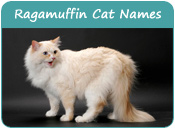
RagaMuffin Cat Names: 36 Calls by Coat, Build, History, and Daily Use
Written by iCatNames Editorial Team · Reviewed
RagaMuffin is a registered breed name, not a general label for every large, longhaired, gentle-looking cat. A responsible shortlist begins by marking identity as registered, documented by prior records, reported by a caregiver, visually similar, or unknown.
The six lanes below use registry language, visible features, history-inspired imagery, and ordinary household taste without mixing their evidence. A color call can follow a photograph. A breed-history call needs a source. A personal name needs neither, and none predicts temperament.
Open separate identity and appearance files
Copy the registered name, registry, breeder or rescue record, sex, birth date, and any pedigree reference exactly when those documents exist. Do not fill missing fields from social media, coat appearance, body size, or a shelter label.
In a second file, describe only what is visible: base color, white distribution, tabby or tortoiseshell pattern, eye color, coat length, tail outline, and current body proportions. Date every image because coat and size change with age and season.
Solid-color calls grounded in a documented or visible route
- Blue — can follow a registered blue color, a cool gray visual impression, or a personal association; record which level supports the call.
- Chocolate — appears in the CFA color language and works as a warm-brown image; visual naming does not establish genotype.
- Lilac — can denote a registry color term or a pale lavender-pink metaphor; screen white balance may shift the apparent shade.
- Cinnamon — is another formal color word and a familiar spice image; the name does not prove the underlying color genetics.
- Cream — uses a recognized pale color term with one clean beat; distinguish a formal classification from household color language.
- Smoke — may describe a registered smoke pattern or a misty visual effect; inspect hair roots and records before using technical wording.
CFA permits a wide range of colors and patterns while applying specific show terms. A pet household may still use any color metaphor it enjoys. The key is to label observation, registration, and imagination separately.
White markings and pattern calls without invented symmetry
- Mittens — notices white feet or a clothing image; photograph each paw because the marking need not be symmetrical.
- Socks — offers a familiar white-foot metaphor and a crisp final consonant; record whether all, some, or no paws actually motivate it.
- Tux — compresses tuxedo imagery into one beat; a formal bicolor classification and a household suit metaphor are not identical.
- Patches — suits visibly separated color areas without naming a specific genetic pattern; avoid turning irregularity into a flaw.
- Freckles — can mark small spots on coat, nose leather, or merely a favorite image; consult a veterinarian about changing pigmentation instead of using the shortlist.
- Marble — may evoke swirling stone or a classic tabby look; document the visual route rather than using it as formal pattern proof.
The current CFA standard says white may occur in many amounts and that pattern symmetry is not required. That registry rule can correct a common naming bias: a visually uneven blaze is not a defect that needs a comic or apologetic name.
Coat-texture metaphors separated from grooming facts
- Velvet — evokes depth and smoothness, while the breed standard describes a medium-to-medium-long coat rather than literal velvet.
- Silk — follows the standard’s silky language in a compact call; Silk and Silky should be tested as different daily forms.
- Fuzzy — uses informal silhouette language that may fit a kitten stage; it supplies no grooming or matting assessment.
- Fluffy — directly notices volume and is easy to explain; seasonal density can change the outline without invalidating the family memory.
- Cotton — makes a pale or soft-fiber comparison; the standard actually penalizes a cottony undercoat, so keep this clearly metaphorical.
- Cashmere — borrows a luxury-fiber image and may shorten to Cash; it is not a statement about measured fiber composition or quality.
Capture pre-grooming and post-grooming photographs under ordinary conditions, never after teasing or heavy editing. Record ruff, belly, tail, and hind-leg furnishings independently. A single posed image should not control the shortlist.
Substantial-build images that avoid body judgment
- Bear — can follow a broad silhouette or toy image; it must not justify rough handling, hugging, or assumptions about weight.
- Moose — deliberately exaggerates scale in one audible beat; use it as humor without treating body condition as a joke.
- Atlas — carries mythic strength and map associations; a substantial frame does not prove strength, endurance, or tolerance.
- Magnus — has a large-sounding Latin-rooted form and Mag as a possible shortcut; verify pronunciation across caregivers.
- Titan — invokes mythic scale in two beats; keep it clearly imaginative and never a forecast of final adult size.
- Winston — offers a formal personal register that fits any body type; Win or Winnie may become more common than the full form.
CFA describes a medium-to-large, substantial cat and notes that full maturity takes time. Those are breed-standard observations, not permission to assess an individual’s healthy weight from appearance. Body condition belongs with veterinary evaluation.
Breed-history imagery labeled as imagery
- Angel — may recall older Cherubim-related naming history or a private spiritual association; identify the intended source and avoid temperament claims.
- Cherub — can point toward that historical vocabulary or an art image; it does not certify a specific line or gentle behavior.
- Miracle — expresses a household event rather than a registry fact; write the event in private terms when disclosure is sensitive.
- Halo — provides a round light image and two clear beats; it should never become evidence that the cat is compliant.
- Grace — works as a personal or virtue name; ordinary clumsiness does not contradict it and should not invite ridicule.
- Eden — may invoke a religious text, garden, place, or person; record one route instead of accumulating unrelated prestige.
Historical associations need a registry, club, archive, or dated publication. Do not create a founder story from repeated breeder-site text. When evidence is uncertain, label the name imaginative and let the uncertainty remain visible.
Familiar personal calls as a control lane
- Milo — is compact, familiar, and independent of breed; local reuse may be a larger issue than pronunciation.
- Lucy — offers predictable everyday spelling for many listeners; verify overlap with people and other animals.
- Sophie — carries a conventional personal register and usually ages easily; accents may alter the first vowel or final sound.
- Theo — works independently or as the shorter form of Theodore; settle whether the longer version is allowed before registration.
- Oliver — provides a formal three-beat identity with Ollie available; test both against household speech.
- Chloe — is brief and familiar but has more than one common spelling; have an outside listener spell it after one hearing.
An unthemed personal lane tests whether the breed theme actually improves the decision. If Lucy or Milo wins the practical checks, the family can keep breed appreciation in the story rather than forcing it into the call.
Distinguish RagaMuffin from Ragdoll on the record
The names sound related and their local template pools overlap heavily, but a site collection cannot establish breed equivalence. Copy the breed exactly from reliable documents and preserve CFA capitalization as RagaMuffin in the editorial note.
Do not transfer point-color requirements, origin claims, standards, or temperament descriptions from a Ragdoll source. When identity is unknown, write longhaired domestic cat or visually similar instead of selecting whichever label feels more marketable.
Describe the cat twice under neutral conditions
Ask two people to write six visible features independently under indirect daylight. They should not see the candidate list. Compare agreement on color, white placement, pattern, coat length, tail, and eye shape.
Only features independently noticed by both observers enter the appearance score. A color visible only through one phone filter remains an association, not a stable anchor.
Track development instead of predicting the adult cat
Create dated checkpoints for kitten, one year, two years, and later maturity when known. The CFA standard includes age allowances and describes slow maturation. That does not produce an exact schedule for one animal.
At each checkpoint, note coat length, ruff, tail, eye color, body outline, and the daily nickname. Keep the original naming reason even when the visible feature weakens.
Separate standard language from household care
A show standard describes evaluation in a registry context. It is not a grooming manual, health screen, adoption guarantee, or reason to pursue a cosmetic extreme. Use it to define terminology and boundaries.
Care decisions should follow the veterinarian, groomer, the cat’s tolerance, and current coat condition. A name such as Cashmere does not require a particular brushing schedule or authorize restraint.
Reject personality promises
Breed profiles often use affectionate language, but a family still adopts and lives with an individual. Avoid ranking Angel, Teddy, Grace, or Halo on an expectation of cuddling, docility, or easy contact with children.
Record observed behavior in dated, situation-specific terms: approached after five minutes, accepted cheek touch, hid during visitors, or played with a wand. None needs to become the permanent meaning of the name.
Measure pronunciation and nickname drift
Make a normal-voice recording of every finalist, then have a listener with no shortlist transcribe it. RagaMuffin-themed candidates expose distinct burdens: Cashmere may become Cash, Chocolate may become Choco, and Pomp-like endings can blur with commands.
Put the official and daily forms on separate lines. Show an explicit mapping between Winston, Winnie, Win, and the same animal on every care handoff.
Audit the household sound map
Compare the last six with residents, visitors, nearby pets, voice assistants, and medication cues. Milo and Mallow, Lucy and Susie, or Theo and Leo can collapse when spoken rapidly.
Read pairs from different rooms and in both orders. Mark a collision although the spellings appear unrelated. Emergency use rewards audible separation.
Use a bounded call trial
Saito and colleagues tested whether cats distinguish the familiar spoken label assigned to them from comparison words. Their work does not rank breed terms, texture imagery, name length, or RagaMuffin response.
During two ordinary days, caregivers can log which finalist they pronounce consistently in calm positive moments. Stop when the cat disengages. The exercise evaluates human usability and does not diagnose recognition, obedience, or preference.
Check adult, clinic, and recovery use
Read the finalist in a vaccination reminder, grooming handoff, laboratory result, boarding note, and missing-pet call. Remove any option that makes serious care sound mocking or depends on an unverified pedigree.
Update microchip registry details and contact information whenever they change. Breed spelling, coat description, photograph, and daily call can help a finder, but none replaces the identification number and reachable contact.
Publish a versioned identity card
Store official name, daily form, approved nicknames, pronunciation, identity confidence, registry or rescue source, appearance note, reference URL, collision result, and next review date. Preserve the source image without filters.
The final RagaMuffin name should remain accurate about what is documented, modest about what is merely visible, and useful when the cat is no longer a kitten. Breed appreciation becomes deeper when it leaves room for the individual animal.
Preserve rescue, breeder, and veterinary wording exactly
Copy a source label as written and identify who supplied it. “RagaMuffin mix,” “RagaMuffin-type,” “longhaired,” and “owner reported” carry different certainty. Do not remove a qualifier when transferring the record into a naming worksheet or social profile.
If two records conflict, keep both with dates and ask the issuing organization for clarification. The cat can receive a finished household call while identity remains unresolved. Naming does not require upgrading uncertainty into pedigree.
Keep the visual description useful even if the breed field changes later. Blue coat, white front paws, long tail furnishings, and a daily call can be recorded without resolving ancestry. These observations support handoff and recognition while leaving genetic and registry questions open.
When a DNA panel, pedigree document, or new history arrives, verify what that source can actually establish before editing the card. Append the result and source date; do not erase the earlier uncertainty that shaped the naming decision.
For a reviewed shortlist by breed and coat, see Calico RagaMuffin names, Blue (Grey) RagaMuffin names, Red (Orange) RagaMuffin names, Tabby RagaMuffin names.
Sources and Further Reading
- Cat Fanciers’ Association: RagaMuffin breed profile and standard
- Cat Fanciers’ Association: current RagaMuffin show standard
- Scientific Reports: domestic cats discriminate their names from other words
- AVMA: microchips, registration, and pet identification
Sources support factual context; suggested names and editorial grouping are produced by iCatNames.