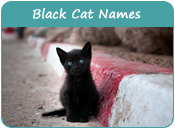
Black Cat Names: 36 Calls beyond Superstition and Stereotype
Written by iCatNames Editorial Team · Reviewed
A black coat is visible; bad luck, secrecy, boldness, and unusual affection are stories people attach to it. A useful naming process keeps those categories apart. It can honor dark color or a household tradition while leaving the animal free to show its own behavior over time.
These 36 linked candidates travel through minerals, pigments, night, wildlife, texture, food, and quiet personal forms. Record the exact reason, examine how the name behaves in public settings, and remove any finalist whose joke depends on fear or mistreatment.
Establish color without claiming breed or character
Write what is present: solid-looking black, white hairs on the chest, faint kitten markings, rusty areas in strong light, or a paler undercoat. Registration terminology and genetics can add precision when verified, but an owner can choose a name from appearance without diagnosing a locus or ancestry.
Next make a separate folklore field. A library source may document that a belief existed in a time and place; it does not make the belief true, universal, or predictive. Mark every luck, witchcraft, protection, or prosperity reference as cultural history rather than feline evidence.
Stone and carbon names with direct visual anchors
- Onyx — a polished-stone image with two clean beats; use it for visual association without claiming a specific mineral color match.
- Ebony — references a dark wood while also operating as a familiar personal call; keep the material explanation factual and brief.
- Jet — compact and high-contrast in speech, with mineral, aircraft, and speed associations; record which route actually motivated the choice.
- Coal — blunt and readily understood, strongest for a matte coat; do not turn dirt, labor, or stocking jokes into the cat’s identity.
- Carbon — a scientific-material cue with two strong syllables; Carb is awkward, making full-form survival worth testing.
- Charcoal — notices a soft black surface with tonal variation; Char or Charlie may become the social name and needs advance agreement.
Place each word beside one unedited photograph. If a listener sees the connection without a personality story, the visual route is doing its job.
Ink, residue, and compact dark-object calls
- Ink — one beat and visually exact for a saturated coat; compare it with sink and drink before using those words nearby.
- Inky — softer than Ink and naturally two beats, but it may sound childish later; test it while imagining an adult veterinary visit.
- Sooty — recognizes powder-black residue without calling the animal dirty; retain the final vowel when speaking from a distance.
- Cinder — mixes dark residue with a glowing-remnant image; Cindy is a likely alias that should appear on the caregiver note.
- Ash — lighter and more neutral than Coal, suited to scattered pale hairs; ensure it stays distinct from hush in quiet rooms.
- Blackjack — combines a color word with a card-game reference and carries more explanation; Jack is the probable routine call.
Object-led names should not become hygiene commentary. A glossy, healthy coat can still be called Sooty as a visual metaphor, while coat changes or skin concerns belong with a veterinarian.
Night imagery without a mysterious-personality claim
- Midnight — a precise time image and an established pet call, with Middy possible; check whether another household item already uses Mid.
- Shadow — describes darkness beside light, but it cannot establish that a cat follows people; Shadow may be shortened to Shad.
- Shade — quieter and less figurative than Shadow, with a clear single beat; test it against stay to prevent routine confusion.
- Dusk — a boundary-of-day reference that allows gray highlights; its final cluster needs careful pronunciation from every caregiver.
- Night — highly direct and easy to spell, yet close to night-night and good night in some homes; log those repetitions first.
- Twilight — broadens the reference toward books, film, and time of day; the provenance card must identify the intended layer.
Night words often arrive with assumptions about stealth, independence, or wakefulness. Remove those claims from the shortlist. Sleep schedule and sociability are observed behavior, not color-based attributes.
Wildlife and sky references with labeled distance
- Eclipse — a high-contrast astronomical event with three beats; Clip is possible but changes the image and may not suit every speaker.
- Raven — a dark bird association that also has literary and personal-name uses; identify the exact source instead of merging them.
- Crow — shorter and rougher in sound than Raven, strong for a birdwatching household; it predicts neither voice nor intelligence.
- Panther — a large-cat silhouette reference with immediate public recognition; do not represent a domestic cat as a wild species.
- Puma — compact and athletic in sound, with animal and brand associations; decide which one the family is willing to explain.
- Bear — an affectionate size contrast or dark-animal image; none of size, cuddliness, courage, or danger follows from it.
Wildlife comparisons are metaphors. The final note can say “Panther, after the dark silhouette,” while husbandry, diet, safety, and legal status remain those of a domestic cat.
Texture and pantry associations
- Velvet — shifts attention from color to tactile appearance; do not assume a coat feels the same way without handling the cat gently.
- Satin — emphasizes shine and smooth visual flow, with a clear two-beat rhythm; avoid presenting fabric quality as temperament.
- Licorice — a food-color association with three spoken beats; Licky can create an unwanted behavior joke, so decide on an alias.
- Olive — may mean a dark fruit shade or an ordinary personal name; record the direct reason so the association stays legible.
- Pepper — notices small black particles and is easy to say, but pep does not prove energy or a lively disposition.
- Truffle — can reference a dark confection or fungus and has a soft comic register; Truff is concise but less recognizable.
A pantry name is an association only. It is not permission to offer the named food, and it does not make diet advice part of the name story.
Understated personal forms and language choices
- Cole — sounds like Coal but functions as a standard personal form, lowering the visual joke while keeping one-beat clarity.
- Blake — an indirect human-style option that can outlast a coat-first explanation; check it against place and family names nearby.
- Bruno — warm and socially familiar with two open syllables; do not attach an unsourced one-word translation to justify it.
- Darcy — fully indirect and easy in public records, useful when the family wants no dark-color label in the spoken call.
- Nox — a compact language or fantasy reference depending on the household; cite the intended source before claiming a meaning.
- Noir — a French color word and film-style association with pronunciation burden; verify the sound with a reliable language source if needed.
Human and language-led forms reduce visible stereotyping but may introduce cultural or pronunciation questions. A name does not become more accurate because it comes from another language; document the source or leave the claim modest.
Audit superstition without reproducing it as truth
Create two columns: documented belief and present household stance. A Library of Congress collection can show that black-cat beliefs circulated, while the ASPCA explicitly treats unfair superstitions as untrue. Neither source describes this individual animal’s personality.
Reject any candidate explanation that depends on threatening the animal, frightening a child, or presenting misfortune as fact. A family may enjoy gothic fiction while still stating that the reference is fictional and treating the cat as an ordinary companion.
Check visibility and photography without blaming the coat
- Photograph the cat against a safe contrasting background in indirect light.
- Check that the face, collar, and identification remain visible without flash into the eyes.
- Review the tag at actual reading distance, using reflective safety gear only when appropriate.
- Keep image quality separate from adoption value, beauty, or personality.
This exercise supports recognition and recordkeeping. It does not ask a dark-coated animal to perform for a camera or justify why it deserves attention.
Stress-test the call around real vocabulary
List five high-frequency words in the home, including another pet’s name, a child’s name, stop cues, feeding language, and emergency phrases. Say each finalist at ordinary volume, then have an observer record the heard form while the list remains hidden.
Note repeats, automatic nicknames, and mistaken spellings. Controlled name-discrimination research does not supply a winning sound formula; this household check is about human consistency and contrast.
Use a respect-and-usability score
Give zero to two points for visible connection, source clarity, comfortable public explanation, distinct sound, stable spelling, and freedom from a harmful stereotype. Compare one direct word such as Onyx, one thematic option such as Eclipse, and one personal form such as Cole.
If a joke scores well only among insiders, ask how it reads on a clinic screen, missing-pet notice, apartment record, or condolence message. Long-term dignity deserves equal weight with novelty.
Remove harmful joke routes before the sound trial
Do not spend testing time on names whose entire appeal is a slur, threat, omen, or comparison to dirt. A private dark-humor reference still affects reception when printed on medication, called in a waiting room, or shared by a child. Eliminate it at the respect gate instead of hoping a nickname will hide the problem.
A candidate can be gothic, dramatic, or comic without treating the animal as cursed. The distinction belongs in the written reason, not only in the owner’s intention.
Handle white hairs and changing black coats precisely
A mostly black cat may have a locket, scattered white hairs, faint tabby markings, or sunlit rust tones. Record those features instead of policing whether the cat is “black enough” for the list. Color words can describe a dominant impression while acknowledging visible variation.
If the coat change is sudden, accompanied by skin concerns, or medically relevant, stop treating it as naming material and consult appropriate care. The article supplies vocabulary, not diagnosis.
Run a missing-pet notice rehearsal
Draft one factual line using the finalist: “Black short-haired cat named Noir; responds to Nwar; small white chest hairs.” Check whether spelling, pronunciation, and description remain useful without the private joke. Then read the line aloud to another person and ask what they would search or call.
This rehearsal tests identification value. It also exposes collisions such as two local Shadows, a Cole heard as Coal, or a Nox that nobody knows how to spell.
Keep lived observation ahead of internet folklore
Maintain a separate behavior log using concrete events: approached a visitor, hid during construction, accepted brushing, or played after dinner. Never rewrite those entries as evidence that a black cat is unusually social, aloof, magical, or unlucky.
When a family story changes, update the association note but leave historical claims traceable to their sources. The real cat’s record should grow from observation, while folklore remains contextual reading.
Complete the black-name handoff
Store official spelling, routine call, accepted nickname, category of association, source if one is claimed, known collisions, and one sentence explicitly separating color from behavior. Align the same spelling across identification and care systems.
A durable black-cat name can enjoy darkness, language, food, wildlife, or gothic style. Its quality comes from precise association and repeatable use, not from making a living animal symbolize luck, danger, secrecy, or any other inherited human story.
Keep the longer research note privately and issue a compact caregiver version. The private file may explain coal, ebony, French vocabulary, literature, or shelter history; the handoff needs only pronunciation, alias, identification details, and the boundary that coat color does not predict conduct. This split preserves depth without requiring sitters to recount historical lore.
Review that boundary annually so later anecdotes do not quietly become color-based rules about unrelated black cats in the neighborhood, shelter, extended family, or broader online community.
Sources and Further Reading
- UC Davis Veterinary Genetics Laboratory: feline coat color
- Cat Fanciers’ Association: coat and color descriptions
- ASPCA: black cats and unfair superstitions
- Scientific Reports: domestic cats discriminate their names from other words
Sources support factual context; suggested names and editorial grouping are produced by iCatNames.