Big-Paw Cat Names: Atlas, Bear, Boots and Sturdy-Footed Picks
By the iCatNames Editorial Team · Published
Large-looking paws can shape a name, but first decide what looks large: width, length, toe spread, fur, white markings or contrast with a compact body.
Proportion is safer evidence than prediction. A paw-led call does not need a guess about breed, adult size or future growth.
Measure the visual proportion, not a promise
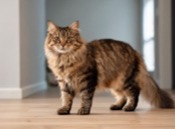
Compare paws with the cat’s head, legs and body in a relaxed standing pose before choosing a scale word.
- Atlas — broad front paws look as though they support a substantial frame.
- Bear — rounded feet and visible spread create a heavy-paw silhouette.
- Moose — comic scale contrast suits a compact cat with outsized-looking feet.
- Tiger — striped legs end in paws that carry a strong wildcat visual echo.
- Leo — lion reference stays modest when the feet and chest both look broad.
- Lion — full scale word for a cat whose whole stance supports the image.
- Panther — dark long-bodied cat has substantial paws within a sleek outline.
- Puma — wide-footed athletic silhouette without a claim about ancestry.
- Lynx — tufted or furry-looking feet create a northern-wildcat visual route.
- Rocky — solid stance and square-looking paws make the call readable indoors.
Use photographs taken from floor height and normal standing distance; close lenses exaggerate whatever sits nearest the camera. A name earns its place when the proportion remains visible in several ordinary views.
A proportion sketch is more reliable than a tape measure for naming. Draw the relaxed standing outline and mark where the paws extend beyond the legs. Repeat from the side. The goal is not a numerical claim; it is to discover whether width, fur or posture creates the impression that led to Atlas, Bear or Moose.
Compare front and rear stance
Some cats carry more visual weight in the front feet, while others reveal size only during a stretched rear-foot position.
- Boots — both front paws look planted and substantial during a square stance.
- Socks — white front feet create an obvious pair even when actual width is moderate.
- Mittens — rounded front paws sit together like a matched set.
- Claw — bold compact word fits visible paw confidence, not scratching damage.
- Bean — toe pads or compact paw shape supply affectionate scale contrast.
- Button — small body makes each rounded foot look like a separate fastener.
- Patch — one paw marking differs clearly from the other three.
- Dot — single toe or foot marking provides a precise identifying detail.
- Stripe — leg bands lead the eye down toward broad tabby feet.
- Bandit — dark paw markings look like gloves or stealthy footwear.
Front paws often appear larger because of position and camera angle. Observe walking, sitting and stretching before deciding which pair leads the theme. Markings may be stronger evidence than absolute width.
Front and rear comparison helps remove camera bias. Watch a normal sit, a comfortable stand and one natural stretch. Boots may emerge from matched front markings, while Stripe emerges from the leg pattern leading into the feet. A strong name explains what people see without turning an angle into anatomy.
Let stride and placement choose the verb
Paw size becomes more distinctive when combined with quiet steps, firm landings, long reaches or rapid floor coverage.
- Scout — large feet place carefully while the cat checks a route.
- Ranger — steady household patrol uses long, deliberate steps.
- Everest — strong reach and high-perch route connect foot size with climbing scale.
- Dash — wide-looking paws move rapidly without a heavy visual landing.
- Rocket — rear push gives the feet a clear role in sudden acceleration.
- Comet — long stride and trailing body line create a fast extended image.
- Willow — large paws arrive softly beneath a flexible, flowing gait.
- Sage — measured placement makes each broad foot easy to notice.
- Olive — quiet low-volume walker carries substantial paws without drama.
- Jasper — firm even stride supports a grounded adult call.
A stride word should describe repeated movement on safe household surfaces. Do not create jumps or chase the cat for a test. Quiet placement can be more distinctive than impact, even when the feet look enormous.
Movement adds a time dimension to the feature. Scout places; Dash crosses; Willow glides; Jasper plants. Use one verb consistently in notes for several days, then see whether family members agree. If each observer chooses a different verb, a color or marking word may be more stable.
Use coat color and paw markings together
Foot color, leg contrast and visible toe outlines can refine the size story without reducing the whole cat to a coat label.
- Onyx — solid black paws appear broad against a pale floor.
- Silver — cool grey feet catch side light around the toe line.
- Smoke — charcoal paws fade into lighter fur farther up the legs.
- Shadow — dark feet arrive quietly before the body enters view.
- Snow — white paws create a bright footprint image on darker legs.
- Pearl — pale rounded feet have a softer visual edge than Snow.
- Copper — orange feet glow warmly against blue-grey household surfaces.
- Ginger — striped warm legs end in clearly outlined broad paws.
- Blue — cool grey feet offer a simple coat-and-proportion call.
- Ruby — reddish accent word suits warm paw fur or a red collar near the chest.
Check clean dry paws in natural light and leave pads, nails and fur unmanipulated. The name comes from ordinary appearance, not cosmetic handling. Color adds specificity only when it stays visible from a normal room view.
Paw color should connect to the leg and floor context. Snow becomes vivid when white feet interrupt dark legs; Shadow becomes vivid when dark feet enter before the body. That scene-based explanation is more specific than calling every pale paw Pearl or every dark paw Onyx.
Choose grounded nature and texture words
Trees, stones and soft materials can separate sturdy structure from furry volume.
- Maple — warm coat and broad feet create a sturdy autumnal image.
- Pebble — rounded individual toes resemble small smooth stones.
- Cotton — long pale foot fur makes the paws look larger and softer.
- Velvet — plush coat texture gives wide paws a smooth finished outline.
- Feather — large-looking furry feet still land with very light contact.
- Honey — golden paws and patient placement soften the scale theme.
- Pepper — dark speckles or mixed toe markings sharpen a pale foot.
- Biscuit — warm rounded paws support restrained bakery humor.
- Mochi — soft compact body makes the feet look broad and pillowy.
- Amber — warm eyes and foot color connect the paws to the whole cat.
Texture words answer why the paws look large. Cotton and Feather point to fur; Pebble points to separate rounded toes; Velvet points to a smooth plush outline. That distinction keeps the list from becoming ten synonyms for big.
Nature and texture words are useful because they explain different sources of visual size. A furry paw can be broad in outline yet light in placement. A short-haired paw can look compact until the toes spread during a stretch. Preserve those distinctions instead of ranking one cat as larger or tougher.
Use scale humor without trapping the cat
Grand titles and tiny nicknames can work when the joke stays respectful through adulthood and ordinary care.
- King — wide-footed seated posture carries a formal household title.
- Queen — matched broad front paws create a composed symmetrical pose.
- Duke — solid two-beat title has enough range beyond paw size.
- Bruno — substantial sound suits a broad-footed cat without a costume theme.
- Max — brief call suggests scale while remaining practical everywhere.
- Tiny — ironic option works only when every family member enjoys the contrast.
- Pip — small bright call keeps humor light beside oversized-looking paws.
- Milo — friendly full-life name when the physical joke should stay secondary.
- Nala — confident familiar call gives the cat identity beyond one feature.
- Felix — classic option preserves range if the paws look less unusual later.
Say each humorous option in a clinic sentence, a quiet bedtime call and an introduction to a visitor. If the joke requires an explanation every time, keep it as a nickname and choose a broader primary call.
Humor needs a long horizon. Picture Tiny on an adult identification tag and King during a mundane nail-care appointment. If the family still feels comfortable, the joke has range. If not, use the humorous word privately and let Milo, Nala or Felix carry the official role.
Build pairs from proportion and motion
Two cats can share the paw theme while differing in color, scale, stride or footwear markings.
- Atlas — with Pip: broad supporting feet beside a compact bright-footed cat.
- Bear — with Feather: heavy-looking round paws and nearly silent furry steps.
- Boots — with Mittens: planted dark feet and paired pale front paws.
- Onyx — with Snow: broad dark paws contrasted with bright white feet.
- Scout — with Dash: careful placement and rapid floor coverage.
- Maple — with Blue: warm paw color beside cool grey feet.
- Pebble — with Cotton: visible rounded toes and fur-expanded softness.
- King — with Tiny: formal scale and deliberate irony with different sounds.
- Jasper — with Willow: grounded stride beside a flowing light-footed gait.
- Tiger — with Pearl: bold striped legs and pale rounded feet.
A pair explanation should contain two distinct observations. If both cats merely have big paws, use coat, stride or markings to find the difference. Clear initial sounds remain important when calling them together.
Pair notes should use a two-column comparison with paw outline, marking and motion. The shared theme stays obvious even when the words come from separate lanes. Bear and Feather both describe feet, but one emphasizes round visual weight while the other emphasizes light furry contact.
Finish with a proportion checklist
The final shortlist should reflect stable appearance across standing, walking and resting without predicting the cat’s future body.
- Atlas — retain when width and weight-bearing stance remain visible together.
- Bear — choose when rounded spread, fur and scale support one strong silhouette.
- Boots — keep when paired foot markings matter more than actual size.
- Scout — use when careful placement is the most distinctive paw behavior.
- Pebble — advance when separate rounded toes provide the memorable detail.
- Cotton — select when fur volume, rather than bone width, enlarges the outline.
- Onyx — keep when dark paws contrast sharply with the usual floor.
- Tiny — retain only when the family values the joke after repeated use.
- Jasper — favor when sturdy stride gives the physical feature adult range.
- Felix — choose the broader call if the paw theme is visible but not defining.
- Boots — advance when matched foot markings create the main visual identity.
- Ginger — keep when warm striped legs lead clearly into broad paws.
- Feather — use when fur enlarges the outline but foot placement stays light.
- King — retain when the formal scale joke still feels natural in plain daily speech.
- Pebble — select when rounded individual toes supply more evidence than total width.
Score proportion, stance, movement, marking and adult usability separately. A finalist needs two strong observations, not five weak associations. Any sudden swelling, sensitivity, limping or changed placement belongs outside the naming checklist.
Retest after growth, grooming changes or seasonal coat shifts without treating change as failure. A kitten named Cotton may retain the call through soft texture even if the feet become proportional. Atlas may retain a steady stance after the comic oversized stage passes. Multiple honest anchors improve durability.
Take one standing photograph and one walking note for each finalist, then write a twelve-word explanation. If the line relies on a breed guess, future-size promise or vague praise, replace it. Width, fur, marking, stride and contrast provide enough evidence without speculation.
A big-paw name should explain the visible source of scale: proportion, furry outline, stance, marking or movement. Keep future growth and pedigree guesses out, give humor an adult-use test and choose the feature that stays clear beyond a close-up photograph.