Colorpoint Cat Names for Masked, Blue-Eyed Beauties
By the iCatNames Editorial Team · Published
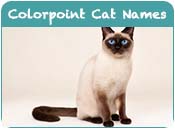
Few cats wear their color the way a pointed cat does. The body stays soft and pale, almost like a blank canvas, while the color pools at the edges — a dark mask across the face, dipped ears, gloved paws, a deep-dyed tail. It looks deliberate, like the cat was dressed by hand. The truth is stranger and more beautiful than any costume, and once you understand it, the names almost choose themselves.
The Science of Points: Color That Follows the Cold
A pointed coat is a form of temperature-sensitive partial albinism. It traces to a mutation in the gene for tyrosinase, the enzyme that builds melanin, the pigment behind every dark hair. In pointed cats this enzyme is heat-sensitive: at a cat’s normal body temperature it barely works at all, so the warm torso produces little pigment and stays cream or ivory. Only in the cooler extremities — ears, mask, paws and tail — does the enzyme switch on and lay down color. Pigment, in other words, follows the cold.
This is why pointed kittens are born nearly white. The womb is uniformly warm, so no points can form before birth. Color creeps in over the first weeks of life and keeps deepening for months, which is why an older seal point is so much darker than the pale wisp it once was. It also explains why a pointed cat can shade darker over a cold winter. The pattern is alive and responsive, written by temperature itself.
The same gene gives these cats their most famous feature: blue eyes. The pigment restriction that pales the coat also leaves the eye’s underlying blue layer uncovered, so pointed cats have eyes in shades of sky, sapphire and ice. A name can honor the gene that does all of this at once. Frost, Glacier, Winter, Snowdrift and Aurora all nod to the cold that draws the color out, while Tyrol and Polar hint at the chill from another angle.
Seal Point: The Deepest, Darkest Mask
Seal point is the classic and darkest of the points, a brown so deep it reads as near-black against a warm fawn body. These cats wear the strongest contrast of all, and they tend to keep darkening with age. The names want richness and depth.
- Sable — the textbook word for a dark, glossy brown-black.
- Cocoa, Mocha and Espresso — deep brews to match the deep points.
- Truffle, Brownie, Hershey and Godiva — the chocolate-dark end of the palette.
- Bear, Otter and Mink — dark-furred animals for a dark-pointed cat.
- Walnut, Chestnut and Acorn — warm woody browns.
- Onyx, Ebony and Shadow — for points that lean almost black.
Blue Point: Cool Grey and Soft Slate
Blue point trades brown for a cool, slate-grey color sitting on a bluish-white body. The effect is misty and elegant, less stark than seal and quietly handsome. Reach for names that suggest cool grey, smoke and stone — without straying into pastel territory, which belongs to the lilacs.
- Smokey, Ash and Storm — classic cool-grey names.
- Slate, Pewter, Flint and Steel — grey stone and metal.
- Misty, Cloud and Fog — soft grey weather.
- Dolphin, Heron and Whale — grey creatures with calm presence.
- Bluebell, Indigo and Denim — for the blue lean in the points.
Chocolate Point: Warm Milk Brown
Chocolate point is a lighter, warmer brown than seal — milk chocolate rather than dark — against an ivory body, and it develops more slowly in kittenhood. These cats deserve the sweet, edible names.
- Nutmeg, Toffee, Caramel and Fudge — warm confectionery browns.
- Hazel, Pecan and Almond — nutty mid-browns.
- Biscuit, Waffle and Maple — cozy breakfast browns.
- Coco, Bruno and Teddy — friendly names that simply read brown.
Lilac and Frost Point: The Palest Points
Lilac point, sometimes called frost point, is the most delicate of all: a pinkish-grey so light the points seem to float on a near-white body, and unlike the seals these cats stay pale even into old age. Because the sibling lilac article owns the full pastel vocabulary, here lean on the frost-and-light angle that ties back to the pointed gene itself.
- Frost, Pearl and Opal — cool, luminous pale tones.
- Dove, Fawn and Oyster — barely-there greys and beiges.
- Ghost, Wisp and Halo — for points so faint they whisper.
- Moonstone and Quartz — pale, glowing minerals.
Flame and Red Point: A Spark at the Edges
Flame point, also called red point, lays bright reddish-gold color on the ears, mask, paws and tail over a warm white body. These are the warmest, most vivid points, and they call for names with heat and shine.
- Flame, Ember, Sunny and Blaze — fire and warmth.
- Ginger, Marmalade, Apricot and Saffron — golden-red tones.
- Phoenix, Amber and Copper — for the glow at the extremities.
- Foxy, Robin and Goldie — reddish-gold by way of nature.
Cream Point: The Gentlest Warmth
Cream point is flame’s quieter cousin — a soft, pale buff at the points instead of a bright red — over a warm white coat. The names should feel mild, buttery and gentle.
- Cream, Buttercup, Custard and Vanilla — soft pale yellows.
- Honey, Peaches and Butterscotch — gentle golden warmth.
- Latte, Marshmallow and Blondie — pale and creamy.
Tortie and Lynx Point: Pattern Within the Pattern
Some pointed cats carry a second pattern inside the points. Tortie point mottles two colors together at the extremities, while lynx point — the tabby version — draws stripes across the mask, ears and legs, often with a pale M on the brow. Two layers of pattern deserve names with a bit of mischief or texture.
- Patches, Calico, Domino and Mosaic — for the mixed-up tortie points.
- Tiger, Stripe, Bramble and Lynx — for the tabby-striped points.
- Freckles, Speckle and Pepper — small-pattern names that suit the broken color.
When the Points Keep Changing
One thing that sets a pointed cat apart from a solid-colored one is that the coat is never quite finished. Because pigment answers to temperature, the same cat can look different across its life and even across the seasons. A kitten arrives pale and grows steadily darker through its first year as its tyrosinase keeps working away at the cool extremities. An older cat that spends winters in a chilly room may shade noticeably deeper than a littermate kept warm. A cat recovering from a shaved patch — say, after surgery — can even grow that fur back darker than the surrounding coat, because the bare skin ran cooler while it healed. Knowing this, some owners pick names that lean into change and motion rather than a fixed shade. Drift, Echo, Shade and Sketch all suit a cat whose color is still being drawn. Sunny works with a wink if your warm-bodied cat keeps its torso bright, while Dusk and Twilight fit one whose points keep deepening toward the dark end. There is something poetic in naming a cat for a coat that is, quite literally, a work in progress.
The Mask and the Gloves: Contrast Names
Strip away the individual shades and you are left with the thing every pointed cat shares: a strong two-tone contrast, a dark mask over a pale face, and feet that often look dipped in color or, in some breeds, gloved in white. It is the most playful naming angle of all, because a masked, gloved cat practically asks to be named like a tiny outlaw or a costumed character.
- Bandit, Zorro, Mask and Robin — for the dark mask across the face.
- Gloves, Mittens, Socks and Boots — for color-dipped or gloved paws.
- Domino, Yin, Oreo and Panda — for the pale-and-dark contrast itself.
- Tuxedo, Jester and Harlequin — for a cat that looks dressed for a part.
Names Rooted in Breed Heritage
Pointed coats run through a family of breeds, each with its own history, and that history is a rich naming well. The Siamese was selectively bred in the West from the Wichianmat, a landrace of cat native to Thailand — known as Siam before 1939 — and pictured in the old Tamra Maew cat manuscripts. Names like Siam, Bangkok, Mali and Sukhothai honor that Thai root.
The Birman carries one of the loveliest origin legends in the cat world: the Sacred Cat of Burma. As the story goes, a temple cat named Sinh stayed with his dying priest, and his white coat took on golden and earth tones while his four feet, resting on the priest, stayed pure white — the reason Birmans famously wear white gloves. Sinh, Burma and Temple all draw on that tale, and the gloved-paw names above fit a Birman perfectly.
The Himalayan blends Persian fluff with pointed color, so Everest, Sherpa and Yeti suit its snowy, mountainous namesake. The Ragdoll, famous for going limp and relaxed in your arms, wears its temperament in names like Floppy, Cuddles and Dolly. The Balinese is essentially a long-haired Siamese with a graceful plume of a tail, and Bali honors it directly. The Snowshoe pairs points with white feet, making Snowshoe, Frosty and Powder natural picks. And the Tonkinese, a Siamese-Burmese cross, wears a softer in-between coat called mink — so Mink and Tonka tip a hat to that velvety middle ground.
Matching the Name to the Personality
Pointed breeds are not only known for their looks. Siamese and their relatives have a long reputation for being talkative, clever and intensely attached to their people, the sort of cat that follows you room to room and answers when you speak. A name that fits the coat is good; a name that also fits the character is better. For a chatty, opinionated cat, Chatter, Echo or Diva lands well. For one that shadows your every step, Velcro or Echo makes the point with a smile. The relaxed, go-limp Ragdoll temperament suits softer picks like Mellow, Cuddles or Snuggle. And for the regal bearing that so many pointed cats carry — that sense of a small monarch surveying the room from a sunny windowsill — royal names such as Royal, Duchess, Prince and Cleo feel earned rather than ironic. The trick is to watch the cat for a few days before you commit, because the right name is usually the one the cat hands you.
Sapphire and Sky: Names for Those Blue Eyes
The same gene that paints the points leaves a pointed cat with blue eyes — a built-in feature no other coat guarantees so reliably. It would be a shame not to name for them. Sky, sea and gemstone names all celebrate that gaze.
- Sapphire, Topaz and Aqua — blue gems and waters.
- Sky, Skye, Bluebell and Indigo — everyday blues with charm.
- Ocean, Marina and Lagoon — blue from the sea.
- Celeste, Star and Nova — celestial picks for a far-away gaze.
Bonded Pairs of Pointed Cats
Pointed cats are sociable, and they often come home in twos — especially with breeds bred for company. When you name a pair, let the names rhyme with the pattern. Light-and-dark duos like Yin and Yang, or Salt and Pepper, play on the pale body and dark points. Sugar and Spice catches the cream-versus-seal contrast. For two masked siblings, Bonnie and Clyde or Bandit and Domino lean into the outlaw look. And for a sapphire-eyed pair, Sky and Ocean or Sapphire and Topaz keep the gemstone theme running across both bowls.
Choosing the Right Name
The best colorpoint name usually lands on one of three hooks: the exact shade of the points, the masked-and-gloved contrast, or the breed’s own story. A seal point Siamese might be Sable for the dark mask or Siam for the heritage; a flame point could be Ember for the color or Bandit for the look. Say the name aloud a few times, watch how the cat responds, and remember that with a pointed kitten the color is still arriving. The pale fluff in your hands today will deepen for months, so it is fine to pick a name for the cat you can already see taking shape — color that follows the cold, and a gaze that stays forever blue.