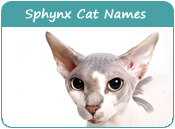
Sphynx Cat Names: 36 Calls with Breed, Skin, and Sound Boundaries
Written by iCatNames Editorial Team · Reviewed
A Sphynx name can notice warm skin, fine fuzz, wrinkles, broad ears, a family fandom, or an ordinary human connection. None of those observations proves temperament, pedigree, allergen level, or medical status. The first useful step is deciding what kind of claim the name is making.
The 36 linked calls below occupy six distinct lanes. Keep official breed evidence separate from a visual resemblance, mark jokes as jokes, label ancient or fictional references, and test the practical spoken form with every person who provides care.
Confirm what the breed label can support
Use registration or reliable rescue documentation when calling a cat a Sphynx. Hairless appearance also occurs in other breeds and individual cats, and the Sphynx standard allows varying fine hair rather than promising a uniformly bare body. Skin can display colors and patterns even when coat is sparse.
Official TICA and CFA profiles describe breed history and standard features. They do not certify an undocumented individual, guarantee personality, or replace veterinary guidance. Record “registered Sphynx,” “identified by rescue as Sphynx,” or “hairless cat with a Sphynx association” according to the evidence actually held.
Body-led calls with an explicit dignity limit
- Cal — a compact personal form that can privately echo a bald-word association; it works publicly without making the joke compulsory.
- Calvin — gives Cal a formal record form and two audible syllables; avoid presenting an internet etymology as the naming proof.
- Baldy — direct and comic, but body-first in every setting; use it only if all caregivers find the tone affectionate and durable.
- Suede — describes a perceived surface texture rather than absence of hair; never touch or rub the cat merely to demonstrate the comparison.
- Peach — can reference fine fuzz, warm color, fruit, or a personal name; specify the lane and do not assume the skin feels peach-like.
- Velvet — a soft-fabric metaphor with clear spelling, suitable when visual texture matters; it makes no promise about touch tolerance.
Apply a consent test to body humor: would the name still be respectful on a medical chart, lost-cat poster, senior-care plan, and memorial? If the answer changes by audience, reserve the joke for invited private use and choose another official call.
Wrinkle, food, and rounded-shape nicknames
- Wrinkles — names a visible feature without euphemism and is easy to remember; check whether Wrink or Winky will emerge in speech.
- Raisin — a small wrinkled-food comparison with two strong beats; keep it clearly figurative and separate from feeding decisions.
- Prune — shorter and drier in tone than Raisin, carrying food and color associations; test whether the comic register remains kind.
- Bean — points to compact shape or toe beans rather than hairlessness, giving the cat an identity beyond the first visual feature.
- Peanut — warm and familiar but likely to become Pea or Nut; decide which abbreviation is acceptable before other people choose.
- Baldwin — a conventional surname sound with a private bald pun available but not required; Baldwin should stay distinct from Balder.
Food nicknames do not describe diet, weight, or body condition. Use them as household metaphors and leave nutrition and medical language to qualified care.
Warm-color and temperature associations
- Ember — suggests a small retained glow and works across several skin colors; warmth is imagery, not a temperature assessment.
- Sunny — bright and social in sound, yet direct sun exposure and skin care are veterinary matters, not reasons supplied by the name.
- Toast — a light-brown or warm-surface joke with one beat; avoid burned-skin language or any implication that heat exposure is amusing.
- Copper — a metallic color reference that can fit patches or eyes; keep it separate from precise registry color designation.
- Amber — moves between color, resin, and personal-name lanes; write the intended connection and test it against Ember for contrast.
- Saffron — a warm spice-color association with two syllables; Saffy may be the actual call and needs to appear on the handoff.
Photograph skin tone only in comfortable indirect light. Colors may read differently across devices and rooms. A naming note may record appearance, while any skin change, lesion, irritation, or care question belongs with a veterinarian.
Egyptian imagery with a Canadian-breed correction
- Sphinx — uses the monument or mythic-creature spelling and explains the breed-name association, but it is not the breed spelling Sphynx.
- Cairo — a modern place reference with two clear syllables; it does not establish the cat’s origin, pedigree, or ancient lineage.
- Bastet — an ancient deity reference requiring museum-quality context; never reduce a living religion or historical figure to “cat goddess” shorthand.
- Cleo — may abbreviate Cleopatra or stand independently, lowering pronunciation burden; identify the actual person or private association meant.
- Nefertiti — a historical royal reference with four spoken beats and strong cultural weight; a planned short form is essential for routine use.
- Anubis — an ancient deity commonly represented with a canid head, not a cat; use it as an Egyptian association without changing that identity.
The modern Sphynx breed traces through North American breeding history in registry accounts. Egyptian names are thematic choices, not evidence that the breed descends from pharaonic cats. Place that sentence directly on the provenance card when this lane wins.
Large-ear and silhouette fandom calls
- Yoda — a recognizable fictional-ear comparison with simple sound, carrying franchise and character baggage beyond appearance.
- Dobby — another fictional silhouette association and a friendly two-beat call; state the source without transferring story events or personality.
- Gollum — visually specific but potentially harsh, requiring a stronger dignity review than a neutral human name.
- Gizmo — can mean a gadget or a fictional creature depending on the family, so the source field must disambiguate it.
- Ducky — an affectionate, low-stakes comparison that may reference sound, posture, or a character; note which explanation is real.
- E.T. — a punctuated film reference that is easy to say but awkward on some databases; decide whether ET is the record spelling.
A recognizable character call can be fun without making the cat perform that role. Separate official character identity, observed physical resemblance, admired story element, and the animal’s own behavior into four lines.
Human names that let appearance recede
- Felix — familiar across languages and cat culture, with two crisp syllables; choose it for social ease rather than an automatic meaning claim.
- Hugo — compact, warm, and unrelated to hairlessness, giving the adult cat a call that needs little visual explanation.
- Daphne — a graceful personal form with stable spelling for many listeners; test whether Daph feels natural as an accepted shortening.
- Esme — concise but accent and spelling may vary by speaker; collect listener transcriptions before finalizing the record.
- Mabel — a conventional two-beat call that shifts attention toward relationship and away from body commentary.
- Arthur — durable and public-facing, with Art or Artie available; list one approved nickname rather than allowing several competing forms.
Keep at least one human-style option in the final comparison. It reveals whether the family wants a Sphynx reference or merely feels obliged to comment on the breed.
Separate care facts from naming metaphors
CFA notes that the breed is not always completely hairless and warns against assuming low allergen status. TICA provides breed information and health context. A naming article should link those sources while directing individual grooming, skin, allergy, temperature, and cardiac questions to appropriate professionals.
Remove medical jokes, diagnostic labels, and care promises from candidate explanations. “Ember, after a warm visual impression” is bounded. “Ember because Sphynx always run hot and love blankets” turns a metaphor into an unsupported universal claim.
Build a five-lane provenance card
- Evidence: registered breed, rescue identification, or appearance-only association.
- Reference lane: body, warmth, Egypt, fiction, or ordinary personal name.
- Source: official breed page or the exact cultural work being referenced.
- Daily form: record spelling, spoken call, and one accepted nickname.
- Boundary: one sentence stating what the name does not claim.
This card prevents Sphinx and Sphynx from drifting together, keeps characters separate from temperament, and gives caregivers only the information they need.
Test sound without testing the cat
Use each finalist during predictable, low-pressure routines. Keep distance, volume, and reward pattern similar. Log how humans pronounce the word, whether the cat is already attending for contextual reasons, and whether other pets or people respond accidentally.
The study on feline name discrimination is not a tournament for syllables. It supports careful discussion of familiar-name responses under controlled conditions; household scoring should focus on consistency, contrast, and caregiver ease.
Compare one appearance call, one reference, and one person name
For example, Wrinkles may win immediate recognition, Sphinx may carry the most relevant breed-related story, and Mabel may be easiest to use for fifteen years. Score dignity, evidence accuracy, public comfort, audible contrast, spelling stability, and nickname control from zero to two.
Read the reason aloud after the score. If the explanation apologizes for the name or repeatedly comments on the cat’s body, lower the comfort mark. A witty call should remain respectful when the novelty of hairlessness has passed.
Handle unknown ancestry and look-alike appearance
When pedigree is absent, write only what the shelter, veterinary record, or visible coat supports. Donskoy, Peterbald, Ukrainian Levkoy, Sphynx, and individual hairless cats have different histories; appearance alone is not a reliable classification tool.
An association name such as Sphinx can still be used. The card should say “hairless appearance inspired the call” rather than promoting an uncertain breed label across insurance, travel, or medical systems.
Audit spelling across databases and devices
Sphynx and Sphinx differ by one letter but make different claims. E.T. may lose punctuation, Nefertiti may be shortened, and Dobby may be autocorrected. Enter each finalist into a phone contact, clinic-style form, tag preview, and spoken dictation test.
Record the acceptable normalized form before adoption-day paperwork. A stylized tag can coexist with a plain database spelling as long as the family knows which is authoritative.
Use two audiences for the dignity review
Ask one person familiar with the cat and one person who sees only the written name to explain its tone. Insiders may hear affection in Baldy or Raisin, while outsiders may hear body ridicule. Neither response automatically decides the issue, but the difference measures public explanation cost.
If the official form feels uncomfortable outside the home, reverse the arrangement: place a neutral human name on records and retain the joke as an invited private alias.
Recheck after the first-impression phase
Wait until caregivers can describe several individual routines unrelated to appearance. Repeat the finalist ranking after the cat has established sleeping places, play preferences, handling boundaries, and social patterns. The point is not to rename from personality; it is to see whether the family still wants the body-centered reference.
A call that remains comfortable after novelty fades has passed a more meaningful durability test than one chosen during the first hour.
Finalize the Sphynx naming record
Copy the winning spelling into identification, veterinary, insurance, and household systems. Store breed evidence separately, attach the one-sentence association, and give sitters the spoken call plus accepted nickname without an essay.
The most durable result acknowledges the striking appearance while preserving the animal’s larger identity. Breed, body, history, fiction, health, and temperament remain separate fields, leaving the daily name accurate enough to explain and simple enough to use.
Retain the runner-up and its failure reason for one month. If the official call is repeatedly replaced, determine whether pronunciation, body humor, franchise explanation, or nickname length caused the drift. Correct the record only after observing consistent human usage; do not interpret normal variation in the cat’s attention as evidence that it prefers another name.
The family chooses the record; feline welfare is never a ballot in that administrative decision.
Sources and Further Reading
- The International Cat Association: Sphynx breed profile
- The International Cat Association: Sphynx breed introduction
- Cat Fanciers’ Association: Sphynx breed profile and standard
- Scientific Reports: domestic cats discriminate their names from other words
Sources support factual context; suggested names and editorial grouping are produced by iCatNames.