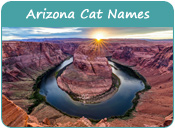
Arizona Cat Names: 36 Calls from Desert Places, Plants, Color, and Sky
Written by iCatNames Editorial Team · Reviewed
An Arizona reference is strongest when it points to a real date, route, home, landscape, or shared memory. The state includes cities, forests, mountains, river corridors, and several desert regions; a single red-rock postcard does not describe all of it.
These 36 linked names move through large places, landforms, plants, colors, weather, and smaller map points. Each option is tested for geographic accuracy, sound, spelling, public association, and life beyond the trip or season that first suggested it.
Pin a date and map point before choosing scenery
Write the date, exact place, people present, and reason it belongs to the cat’s story. A state name may mark an adoption, move, college chapter, family home, highway stop, or view from a window. Verify the map point through an official geographic source rather than relying on a caption copied from a travel post.
Add a boundary field for Indigenous nations, sacred places, and living communities. Do not turn a nation’s name, ceremony, language, or object into desert decoration. This batch therefore emphasizes ordinary place, weather, color, and plant words; any deeper cultural tribute would require its own first-party source and informed context.
State and city calls make the geographic link explicit
- Arizona — names the state directly and creates a four-syllable call with several natural shortcuts. Record whether Ari or Zona will be used, because each sounds like an independent name and may weaken the map connection.
- Phoenix — can refer to Arizona’s capital, the legendary bird, a personal name, or numerous modern organizations. Put city or creature at the top of the card and compare its opening with Felix before assuming the spelling keeps them distinct.
- Sedona — points readily to the northern Arizona city and its surrounding landscape for many travelers. Preserve a specific hike, home, event, or visit rather than borrowing a generalized spiritual claim, then trial the flowing three-syllable call indoors.
- Prescott — can honor the Arizona city, another place, or a family surname. Local pronunciations may surprise visitors, so write the household form on the sitter note and decide whether repeated correction will strengthen or tire the memory.
- Winslow — offers an Arizona city route alongside music, surname, and other-place associations. Name the actual stop or connection and test Win, since the likely shortcut loses most of the geographic specificity.
- Chandler — may point to the Arizona city, a surname, occupation, or television character. The location card should include the precise personal tie, while Chan receives a separate comfort and sound check.
City candidates remain usable when listeners miss the map reference. If the household dislikes explaining geography, score the word for rhythm and family connection instead of trying to make every introduction educational.
Landform and water words need a precise Arizona example
- Canyon — can honor the Grand Canyon, another named canyon, a road, or the landform itself. Identify which one appears in the family record and avoid presenting a vast, culturally layered place as a generic orange backdrop.
- Catalina — may refer to the Santa Catalina Mountains near Tucson, Catalina State Park, an island, or a personal name. Write the complete Arizona reference and test Cat as a likely but highly generic shortcut.
- Sonora — can point to the Mexican state, the Sonoran Desert spanning an international region, or a personal association. Do not collapse Mexico and Arizona into one place; label the exact geographic route and pronounce all three syllables consistently.
- Rio — is a river word in both Spanish and Portuguese contexts and names many places, people, and works. If an Arizona waterway inspires it, write that waterway on the card rather than suggesting the short word belongs uniquely to the state.
- Willow — may connect to a tree, creek, street, place, or established personal name. Arizona contains riparian landscapes as well as dry country, but the household should document its own willow or map point instead of using a broad ecology claim.
- Mesa — can name the Arizona city or the flat-topped landform from Spanish geographic vocabulary. Select city, landform, or family route, then compare the two clean syllables with stay before relying on the attractive written symmetry.
Use coordinates or a marked paper map for this lane, but match the public explanation to the family’s preferred sharing boundary. A personal adoption location can remain private while the broader state connection stays visible.
Desert plant calls use photographs rather than live props
- Cactus — gives the desert lane a blunt two-syllable image but describes a large plant family, not an Arizona-only species. A photograph supports the memory without bringing spines or unfamiliar plant material into the cat’s space.
- Sage — can indicate plants, a muted color, wisdom, or a personal name. Because several unrelated plants use sage in common names, record the exact garden or sound route and avoid claiming botanical precision from one word.
- Zinnia — provides a bright garden-flower call with three distinct syllables. It belongs to a cultivated or family-garden lane rather than a universal desert symbol; use a printed image and verify household plant safety independently.
- Poppy — may honor a flower, personal name, color, or family nickname. Arizona has an official state flower other than poppy, so this candidate needs a real garden, hike, artwork, or sound preference rather than an official-symbol claim.
- Blossom — describes a flowering stage without naming a species and may connect to spring travel or a family garden. Its broadness is useful when identification is uncertain, though the two syllables should be compared with awesome in noisy speech.
- Juniper — can follow a plant, place, fragrance memory, or modern personal-name route. Different juniper species and habitats require specific sources; June should be trialed because the shortcut shifts the name toward a month and person.
The Arizona State Library lists official symbols, while the National Park Service documents local ecosystems. Check those sources before labeling any plant emblematic or native. The name trial itself needs only a flat image, note, or travel record.
Copper and earth tones should survive neutral light
- Copper — can follow Arizona’s official state-metal association, a warm coat, a coin, or a family occupation. Keep the civic fact and visual match separate, then decide whether Cop is acceptable as a spontaneous nickname.
- Amber — pairs translucent warmth with an established human-name rhythm without claiming an Arizona symbol. Compare the coat or eye impression in indirect daylight, and test its opening against ember before entering the spelling on records.
- Rusty — can describe an orange-brown palette, weathered object, person, or memory. Never let it imply neglected grooming or health; the color card needs a neutral photograph and the sound round needs a Dusty comparison.
- Goldie — turns sunlit yellow into an easy two-syllable name. Gold is not the same as copper, and color does not assign value to the animal; keep the exact swatch and public explanation modest.
- Slate — introduces a cool gray or rock-material route that counters the usual warm postcard palette. It may suit mountain, roof, school, or coat memories; test the compact ending against stay and late.
- Hazel — can follow eye color, plant imagery, a person, or family history. Eye descriptions change with lighting and age, so use stable adult observation or a veterinary note rather than a filtered close-up.
Place one unfiltered image from morning and one from the cat’s usual room beside each color card. A candidate passes when the association remains plausible in both, or when the family openly keeps it for a non-color reason.
Sky and weather calls should not romanticize exposure
- Dawn — can preserve an early arrival, desert sunrise, person, or time of day in one concise syllable. Observe light from a safe indoor position and contrast the call with down near doorways.
- Sunset — provides a two-beat evening image that may connect to a specific viewpoint or moving day. It does not require outdoor access, and the ending should be tested beside sit so a visual memory does not create cue confusion.
- Sunny — can mark a bright day, yellow coat, person, or disposition. Weather supports the card; cheerful behavior does not have to. Make sure the long final vowel differs from another resident name before choosing the friendly rhythm.
- Rain — can remember a monsoon storm, adoption-day shower, song, or personal name. Arizona weather varies by season and elevation, so add a date and location instead of describing the whole state as uniformly dry.
- Storm — may follow documented weather, dark coloring, a fictional figure, or a family event. Keep extreme-weather safety separate from the dramatic word, and reject any explanation that turns feline fear during thunder into entertainment.
- Summer — can mark a season, person, school break, or arrival date. Arizona heat is a safety issue rather than a playful personality, so trial this familiar two-syllable call indoors and keep temperature precautions unchanged.
The National Weather Service describes the Arizona monsoon as a defined seasonal weather pattern, not simply any dramatic rain. A dated observation keeps this lane honest and prevents climate shorthand from replacing local conditions.
Smaller place names reward a map check and a personal reason
- Bowie — can refer to the Arizona community, musician David Bowie, knife, surname, or other places. Ask listeners for the first association, then retain the map route when a real stop, home, or story supports it.
- Parker — may honor the Arizona town, a person, surname, or occupation. The geographic connection will not be obvious, which makes it a strong sound-led option when the family wants a private map note rather than public theme.
- Benson — can point to the southeastern Arizona city or many people and places elsewhere. Record the exact route and test Ben, since the common shortcut may become the entire call within days.
- Florence — names an Arizona town as well as the Italian city and many historical people. Specify state and memory on the card, then collect outside reactions to learn whether the European or personal-name reading dominates.
- Jerome — may refer to the Arizona town, another place, a historical person, or a family member. The two strong syllables support daily use; verify the map story and decide whether Jerry is welcome.
- Yuma — gives a direct southwestern Arizona city route with two clear syllables. The word also has wider geographic and cultural contexts, so keep the family connection specific and avoid using it as generic desert flavor.
Take the shortlist beyond the postcard
- Map pass: mark the exact state, city, landform, garden, road, or weather station behind each survivor. Remove any geographic claim that cannot be stated precisely.
- No-postcard pass: hide travel images, red-rock filters, souvenirs, and route maps. Use each call during feeding, play, grooming, medication, carrier, and bedtime sentences.
- Listener pass: ask three people for spelling and first association. Record when myth, music, another state, another country, or a personal name arrives before Arizona.
- Record pass: type the exact form into sample veterinary, tag, microchip, and insurance fields. Agree on shortcuts before city names split into unrelated everyday forms.
Keep one finalist tied to a dated Arizona location and one retained mainly for sound, color, or family memory. Trial each indoors for two ordinary days. Do not stage desert exposure, plant contact, wildlife encounters, or heat to reinforce the theme.
Before deciding, imagine the household living in another region five years later. The location finalist should still prompt a specific memory without requiring a souvenir display, while the sound finalist should remain legible even when a new neighbor hears no Arizona connection. Note which explanation is shorter, more accurate, and easier to share at the level of privacy the family prefers.
Select the call that travels well beyond the state and still points back to a truthful story. Store the map card with adoption records, use one spelling across care systems, and let a precise personal connection replace generic western scenery.
Sources and Further Reading
- Arizona State Library: official Arizona state symbols
- National Park Service: Saguaro National Park nature and desert context
- National Weather Service Tucson: North American monsoon information
- U.S. Geological Survey: Geographic Names Information System
- Scientific Reports: domestic cats discriminate their names from other words
- AAHA: pet microchipping and current identification records
Sources support factual context; suggested names and editorial grouping are produced by iCatNames.