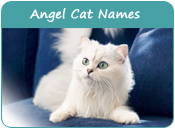
Angel Cat Names: 36 Messenger, Halo, Light, and Grace Calls
Written by iCatNames Editorial Team · Reviewed
An angel-themed call carries more than one possible claim. It might honor a person, identify a figure from a specific religious tradition, point toward light, preserve a family hope, or make an affectionate joke about a cat who has just pulled a towel from the rail.
The following 36 linked choices keep those lanes visible. That lets a household enjoy celestial imagery without treating every language, text, artwork, and belief system as interchangeable evidence.
Write a route card before testing the sound
Give every finalist five lines: exact spelling, selected route, reference used, household reason, and likely everyday shortcut. A religious figure needs the tradition and source named. A translation needs a current dictionary or a knowledgeable speaker. A white-coat image needs no invented etymology at all.
The card also exposes a common mismatch. Owners may love a formal devotional form but call the cat by a nickname that loses the reference. Neither version is wrong; deciding before the tag is ordered prevents two competing names from entering clinic and microchip records.
The Angel name family keeps the theme direct
- Angel — states the theme with one familiar spelling and two clear beats. It can be sincere or gently ironic; settle that tone together so introductions never turn the cat into the target of a repeated behavior joke.
- Angela — moves the theme into an established personal-name form. The final vowel makes it easy to extend across a room, while Angie is the obvious shortcut to test against any resident named Andy.
- Angelica — gives the idea four syllables and several possible associations beyond the celestial one. Say the full form during feeding and handling; if it always collapses to Angel, record which version actually belongs on identification.
- Angelina — has a flowing sound and may be chosen for a person, family link, or the broader Angel form. Keep the inspiration precise, and rehearse Lina because a natural nickname can become more durable than the original theme.
- Angelo — offers a masculine human-name route whose opening is firm and whose finish stays open. Check pronunciation within the language or family being honored rather than presenting one English realization as the only correct version.
- Evangeline — sits near the messenger and good-news language family but deserves its own etymology check. Its length invites Eva, Evie, or Vangie; choose one approved fallback before daily speech chooses for you.
Shared letters do not prove shared history. A reputable name reference can show which forms are genuinely related and which merely look similar in modern English spelling.
Named figures require a belief-context label
- Gabriel — appears in more than one religious tradition, so the source card should identify the household route rather than flattening them together. Its three syllables remain audible, and Gabe makes a compact backup call.
- Michael — is common as a human name as well as a figure in religious texts. That familiarity helps with spelling but raises a roster issue: do not use it if a close person already answers to the same sound.
- Raphael — can enter through religious material, art, a person, or another cultural reference. Label the chosen one, then decide whether the household says three syllables or favors Raf in quick care routines.
- Uriel — needs tradition-specific checking because recognition and status vary across texts and communities. The unusual opening distinguishes it from many pet cues, though listeners should write it once from hearing before the spelling is finalized.
- Ariel — carries several well-known routes, not all of them angelic. A family selecting the religious lane should cite it; a family selecting literature, film, or a person should say so without borrowing a celestial explanation.
- Seraphina — evokes seraphim through a personal-name form and gives the household a long ceremonial call. Test Sera separately because it changes both the rhythm and what unfamiliar listeners may assume about the spelling.
Religious names do not predict a gentle temperament, a protective role, or good behavior. They record the family’s reference. The cat remains free to be shy, bold, noisy, quiet, affectionate, or independent without confirming a label.
Halo and wing images work without a translation claim
- Halo — supplies a visible ring-of-light image and a clean two-syllable call. It reads quickly on a tag, although the long first vowel should be compared with Hazel or Harlow if either is already used nearby.
- Heaven — expresses place imagery or personal belief rather than a personality test. Its soft ending travels well indoors, but some families may prefer it only when the spiritual statement feels comfortable in public introductions.
- Celeste — can follow an established personal-name route while suggesting the celestial in English conversation. Confirm the stress used by the household, then listen for confusion with Sel or Celestie as spontaneous nicknames.
- Heavenly — makes the adjective itself the call. The three-beat form is expressive but conspicuous, so use it in ordinary sentences for two days and notice whether people enjoy saying it or repeatedly replace it with Heaven.
- Dove — offers bird, peace, color, and personal-symbol routes without claiming that the word literally means angel. Its single syllable is economical; check it against love and move because those household words occupy nearby sound space.
- Feather — points to wings through texture rather than doctrine. It may suit a light-footed impression or soft coat, yet neither observation proves temperament; Feath is awkward, so confirm that the full form stays intact.
Images are often the safest lane when a family wants atmosphere but not a theological declaration. Write halo, wing, sky, or bird on the card and resist upgrading the image into an unsupported ancient meaning.
Light and pale-material calls can follow the cat’s appearance
- Alba — can be researched through several language and personal-name routes, while many English speakers also hear a bright dawn-like sound. Choose one verified explanation and avoid bundling every possible language into the same introduction.
- Lux — is short, crisp, and associated with light through Latin vocabulary. A one-syllable name benefits from a collision test against luck, look, and lunch before the household relies on visual elegance alone.
- Pearl — fits luster, a pale coat, a birthstone connection, or a person being honored. Its final consonants stay distinct at normal volume, though the reference should be pearl itself rather than a promise that the cat will act refined.
- Opal — offers shifting color and mineral imagery for a white, cream, gray, or multicolored cat. Use a real opal photograph if color is the reason, and include Opie because that nickname may appear first.
- Snow — is visually immediate for a pale coat and does not need a fabricated foreign origin. The compact sound works well, but snow, no, and go can blur during fast speech; test complete care sentences instead of isolated calls.
- Dawn — connects the shortlist to first light, a time of day, or a person. It suits warm cream as easily as white fur; compare the compact sound with down before using it near furniture cues.
Make one fur photograph in indirect daylight, then a second beneath normal room lighting before letting color decide. White balance, flash, seasonal coat change, and pale tabby markings can alter the impression, while a nonvisual personal reason survives every photograph.
Virtue words need humility rather than behavior forecasts
- Grace — may honor a person, a religious concept, movement, or the family’s value. It remains useful even if the kitten tumbles off the sofa; the name records intention, not a performance standard.
- Hope — can mark recovery, adoption, or a private family chapter without disclosing details to strangers. Its open vowel carries clearly, yet close use of nope in training deserves a listening check.
- Faith — expresses belief, trust, or a person’s name. The household should be ready for the public association and avoid claiming that the cat embodies a moral quality that animals cannot be asked to demonstrate.
- Mercy — has a distinctive two-beat cadence and can reflect compassion or an existing personal name. It may acquire Merc, which sounds harder than the full form; decide whether that contrast is welcome.
- Peace — turns a hope for the home into a concise call. It can be meaningful after upheaval, but do not wield it to shame an active cat for normal play, vocalizing, or adjustment behavior.
- Pax — provides a compact peace-word route that needs its language label recorded. Its final x is acoustically sharp, and families should test whether it collides with packs, snacks, or a resident named Max.
A value name belongs to the humans’ story. Score it on sincerity, public comfort, sound, and durability, never on whether a kitten appears to fulfill a moral expectation during the first week.
Rarer forms deserve a pronunciation and source audit
- Malaika — may be encountered through East African language and personal-name contexts. Consult an appropriate dictionary or speaker for the intended route, preserve the vowel pattern they give, and do not reduce a multilingual form to exotic decoration.
- Serafina — offers a spelling distinct from Seraphina. Put both on the record sheet, select the one supported by the person, language, or work being honored, and expect Sera to make them sound identical at home.
- Seraphim — uses the plural term itself and carries a more explicitly religious register. Verify how the selected tradition uses it, then test whether the unusual final sound remains comfortable during casual veterinary and boarding conversations.
- Gloria — has long-standing human use and may also evoke devotional or musical language. Record the actual inspiration; a three-syllable form gives good rhythm, while Glo shifts it toward the light-image lane.
- Cherub — is familiar in art and speech, but popular winged-child imagery does not capture every historical or religious use. Keep the explanation modest and see whether Cheri becomes an unwanted shortcut.
- Divine — states a broad sacred or admiring adjective rather than naming a particular angel. It suits a family comfortable with theatrical language, and the second syllable should be heard beside dine and bedtime feeding cues.
Decide whether the tone is solemn, affectionate, or ironic
Read every remaining name in three introductions. First, give the serious source-based explanation. Second, use the name as an ordinary term of affection. Third, imagine the cat has knocked a plant pot over and a visitor repeats the name as a joke. Remove a candidate if only one tone feels respectful or if the humor would grow sharper with repetition.
Families with different beliefs should also set a sharing boundary. The record card can keep a private devotional reason without requiring children, sitters, clinic staff, or guests to repeat it. Conversely, a household choosing a visual Halo or Feather route should not let listeners assume agreement with a religious claim that was never intended.
Use a two-route trial to reach the final pair
- Source check: give the cards to a reader who missed the drafting process and ask for each explanation. Discard options dependent on an improvised translation or merged belief tradition.
- Sound check: say the full form and likely nickname from one, three, and six meters during calm moments. Record listener transcriptions instead of treating the cat’s reaction as controlled research.
- Record check: enter the spelling on a practice veterinary intake, tag purchase, emergency contact card, and microchip update screen. Resolve accents, variants, and abbreviations now.
- Comfort check: introduce the name to a friend with no coat or personality description. Keep it only if the family still likes the explanation that remains.
Retain one candidate whose strength is a documented person, text, language, or value, and one whose strength is visual or sonic. Use both in ordinary household sentences for forty-eight hours. The stronger call will usually be the one that needs fewer corrections and no exaggerated claim.
Once selected, repeat one spelling across identification records and keep the contact information current. An angel association may be solemn, playful, or luminous; daily consistency is what turns that association into a usable name.
Sources and Further Reading
- Encyclopaedia Britannica: angel in religion
- Behind the Name: Angel name history and language forms
- Behind the Name: Gabriel usage and forms
- Scientific Reports: domestic cats discriminate their names from other words
- AAHA: pet microchipping and current identification records
Sources support factual context; suggested names and editorial grouping are produced by iCatNames.